Tribes of Saudi Arabia
Traditional costumes reflect the rich cultural identities of Saudi Arabia’s tribes, showcasing their unique heritage, craftsmanship, and regional diversity
Tribes in Saudi Arabia maintain a strong cultural identity through traditional practices, social structures, and linguistic heritage. They play a vital role in the social and political fabric of the country. Tribal affiliations often influence social interactions, marriage, and local governance. Additionally, the Bedouin lifestyle, characterized by nomadic or semi-nomadic existence, is a significant aspect of many tribes’ heritage, though modernisation has altered some traditional ways of life.
In contemporary Saudi Arabia, while the influence of tribes has diminished in some areas due to urbanisation and modernisation, tribal affiliations still hold social and political importance. Tribal customs and traditions continue to be celebrated, particularly in rural areas, and play a role in the cultural preservation of Saudi heritage.
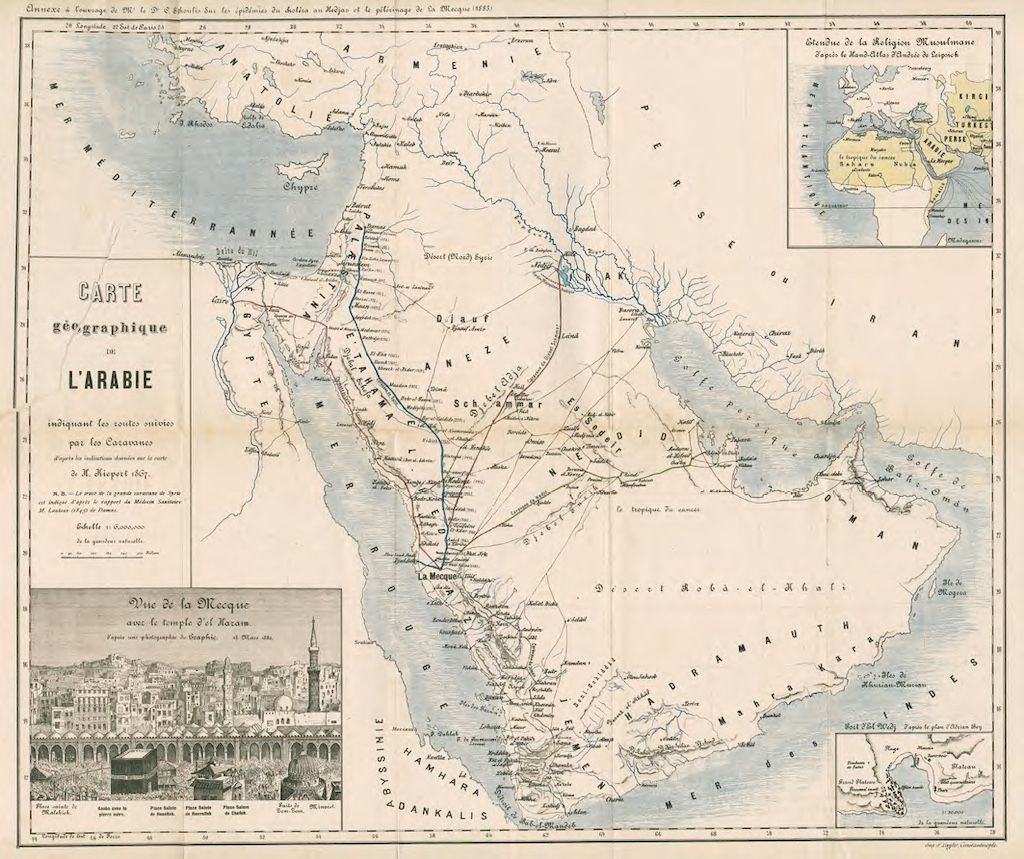
Organising the website into logical sections has also been a challenge. In some instances, costumes had to be grouped by tribe and in others by geographical location. The geographical coverage is determined by the scope of The Mansoojat Foundation collection. As the costumes have been collected from numerous donations and field trips, their geographical distribution is uneven – some regions of the Kingdom are sparsely represented, while others are more strongly represented.
For ease of use, we have allocated the tribes to the five main territories. However, with the tribes of Saudi Arabia, it should be noted that the boundaries of a territory are an artificial constraint on tribes’ movements.
List of tribes in Saudi Arabia, categorized by their primary regions:
Northern Region Tribes
- Shammar – Predominantly found in the Ha’il and northern regions.
- Al-Rashidi – Mainly in Ha’il and surrounding areas.
- Bani Atiyah – Located in the Tabuk region.
- Al-Jawf tribes – Various tribes in the Al-Jawf province, including Al-Sharari.
Southern Region Tribes
- Qahtan – Primarily in the Asir, Najran, and Jizan regions.
- Banu Yam – Centered in Najran.
- Al-Murrah – Found in the southern and eastern parts of the country.
- Banu Amr – Located in the Asir region.
- Ghamid – Situated in the Al-Bahah region.
- Zahran – Found in Al-Bahah and surrounding areas.
- Hawsawi – Present in the southern regions and known for their distinct culture.
- Al-Harbi – Also found in the southern areas, particularly in mountainous regions.
Eastern Region Tribes
- Bani Khalid – Predominantly in the Eastern Province (Ash-Sharqiyah).
- Al-Murrah – Also found in the eastern part of the country.
- Ajman – Located in the Eastern Province.
- Al-Dawasir – Found in the Eastern Province and parts of the south.
Western Region Tribes
- Harb – One of the largest tribes, found in the Makkah and Medina regions.
- Juhaina – Located in the Medina region.
- Banu Hilal – Present in the Makkah and surrounding areas.
- Thaqeef – Found in the Taif region within the Makkah Province.
- Hudhayl – Located in the western region, particularly near Makkah.
Central Region Tribes
- Al-Saud – The royal family and part of the larger Anizah tribe, primarily in Riyadh.
- Anizah – Found in the central region, including Riyadh and Al-Qassim.
- Mutayr – Located in the central and northern areas.
- Subay’i (Subaie) – Present in the central region, particularly around Riyadh.
- Utaybah (Otaibah) – A powerful tribe in the central region, including Riyadh.
- Al-Dawasir – Also found in the central region, including Wadi Al-Dawasir.
- Al-Mujamma’ah – Tribes within the Al-Qassim region.
Notable Tribes Across Multiple Regions
- Qahtan – Spanning southern and central regions.
- Shammar – Found in both northern and central regions.
- Banu Khalid – Present in both eastern and parts of the central regions.
- Al-Murrah – Located in both eastern and southern parts.
- Mutayr – Found in both central and northern areas.
These tribes have rich cultural heritages and have played significant roles in the history and development of Saudi Arabia. Each tribe has its own distinct traditions, social structures, and contributions to the country’s cultural mosaic.
Recent Collection Articles
Explore & discover the splendour of our collection
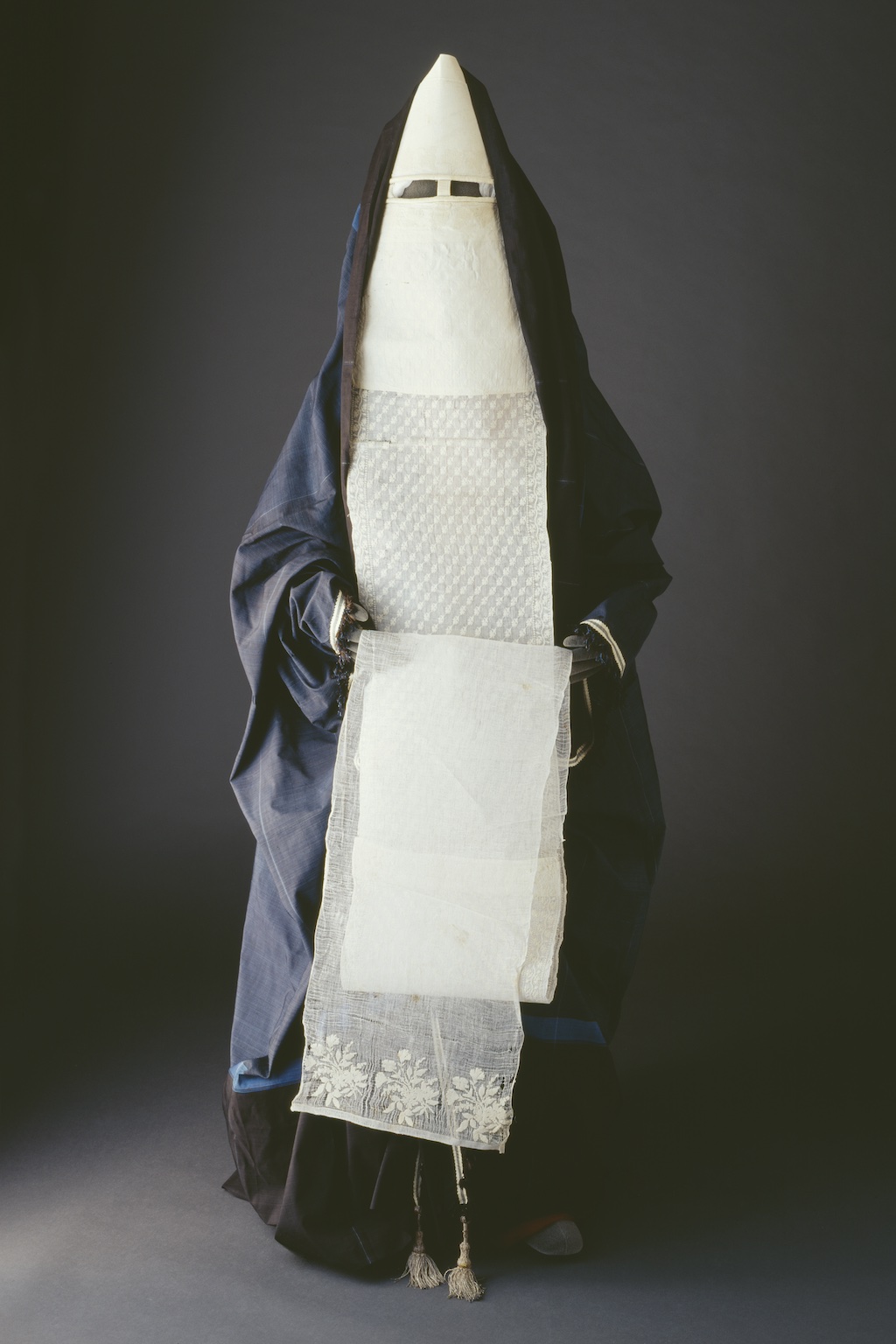
Hijaz white burqu
Hijaz, Western Region Hijaz white burqu (face mask) of fine gauze which is heavily starched. It is embroidered along the front and comes with different floral motifs and in varying lengths. The Ka‘bah at Makkah[...]
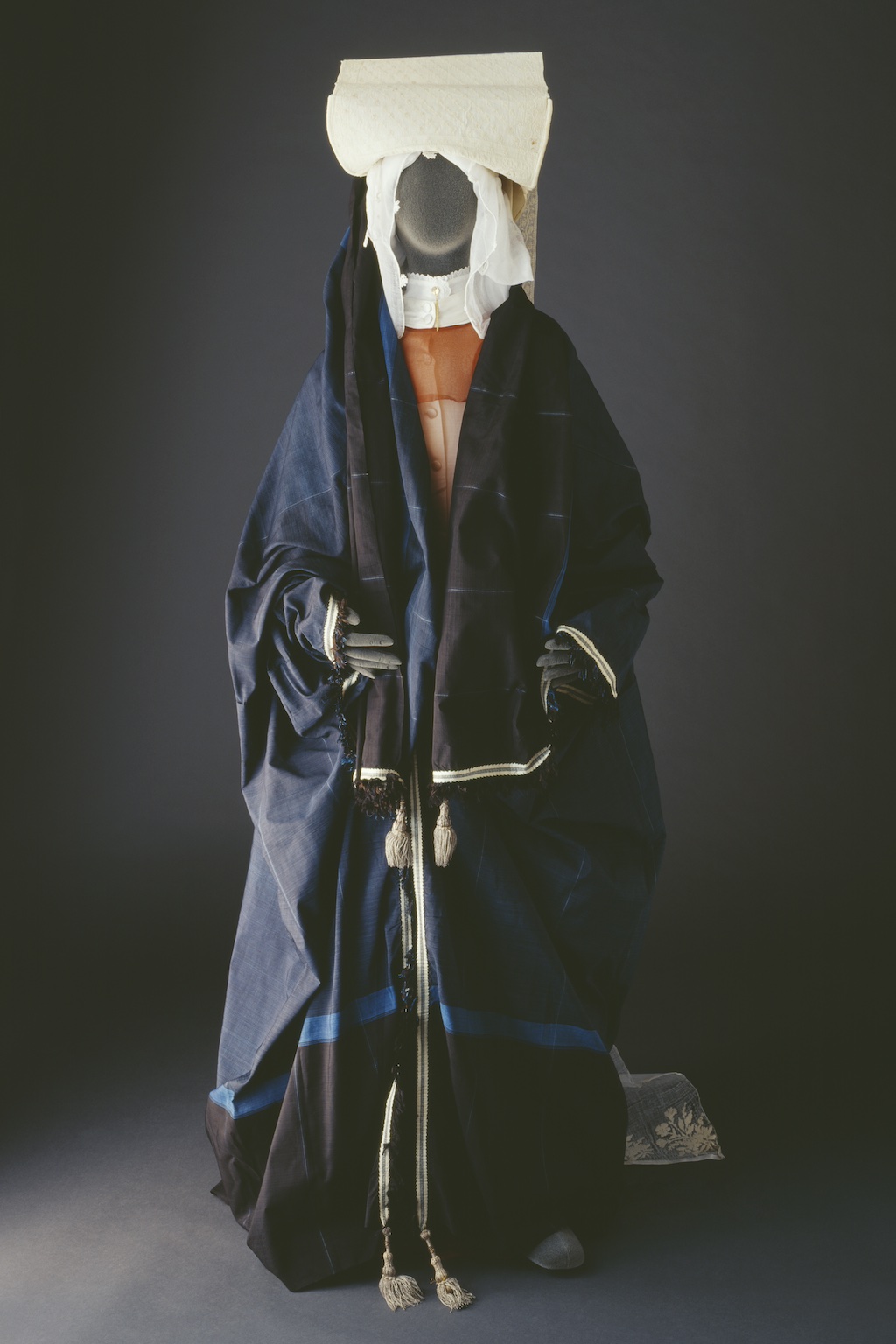
Hijaz milayah wrap
Hijaz, Western Region Hijaz milayah large rectangular wrap worn to go out. It is made of two panels with decorative bands and tassels along the edge. The silk fabric was either imported from India or[...]
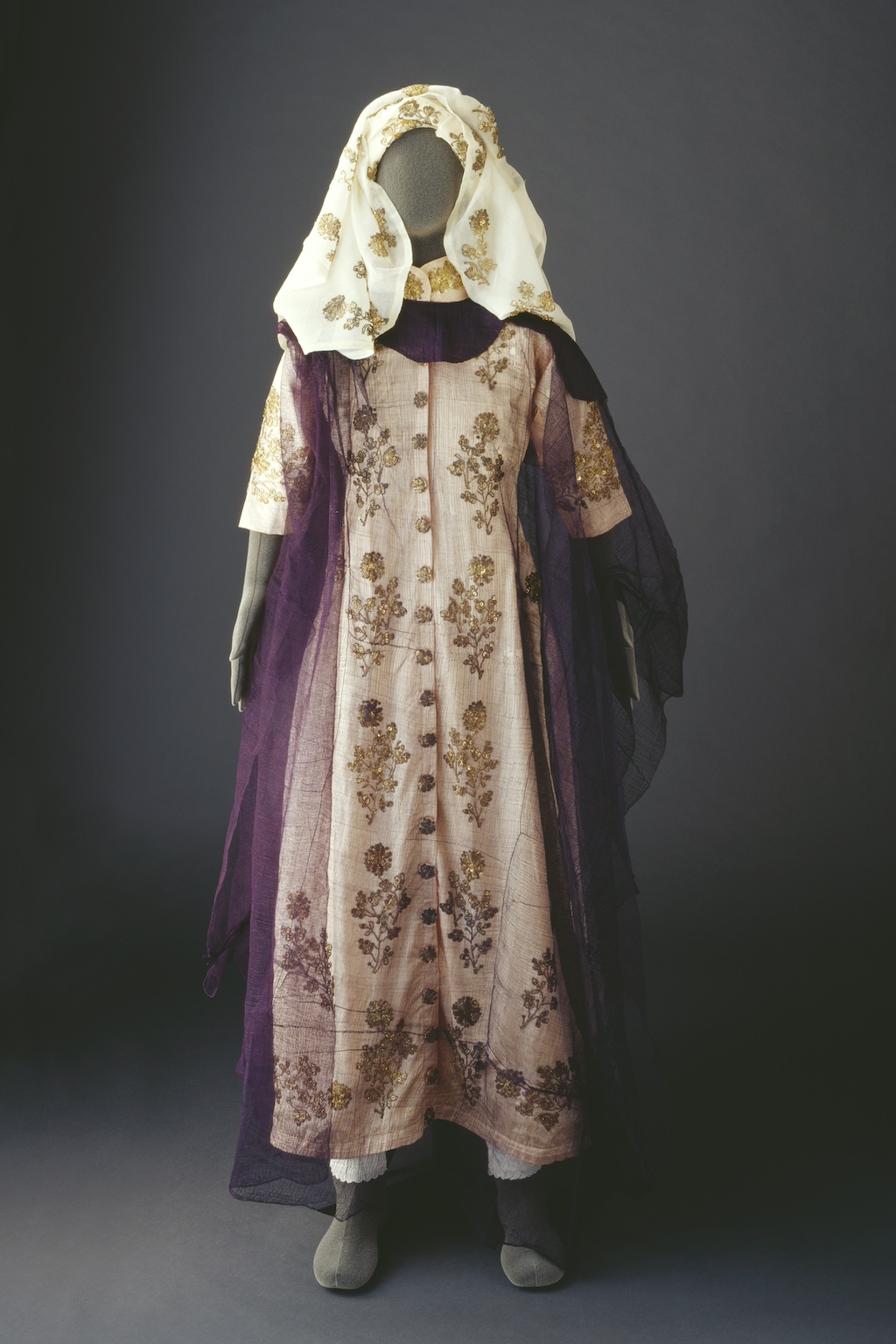
Hijaz ensemble
Hijaz, Western Region Hijaz ensemble with the inner fitted zaboon embroidered in a floral design with gold thread and small sequins. The outer thobe is made of a sheer linen-like fabric. The Ka‘bah at Makkah[...]
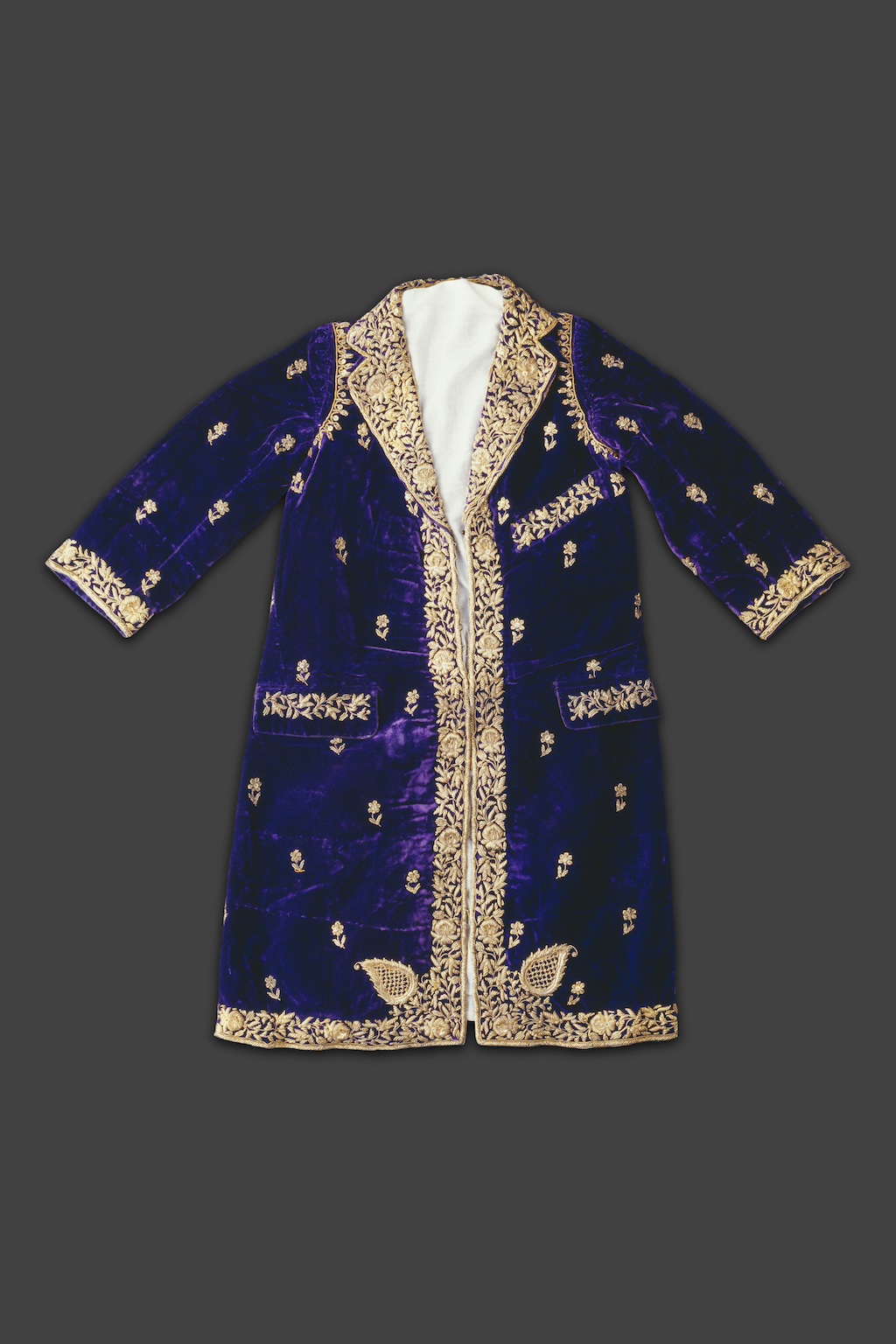
Hijaz boys’ fine silk velvet coat
Hijaz, Western Region Hijaz boys' fine silk velvet coat embroidered with sequins and gold thread. This type of garment was worn for traditional festivities. The Ka‘bah at Makkah (first established at the time of the[...]
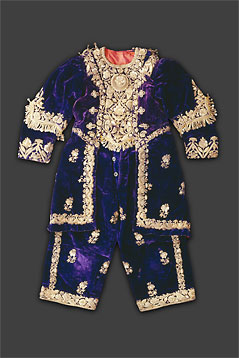
Hijaz boys’ two piece embroidered velvet suit
Hijaz, Western Region Hijaz boys' two piece embroidered velvet suit dating to c.1930. This style was restricted for the use of young boys. The Ka‘bah at Makkah (first established at the time of the prophet[...]
Recent Articles
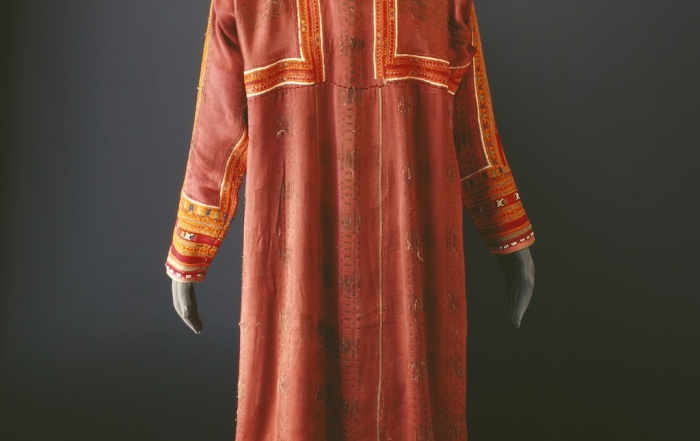
Wadi Dawasir silk thobe
Wadi Dawasir, Central Region Wadi Dawasir thobe of silk with very fine embroidery along the front and the two sleeves. These embroidery motifs are repeated on thobes from all over the Central Region and are[...]
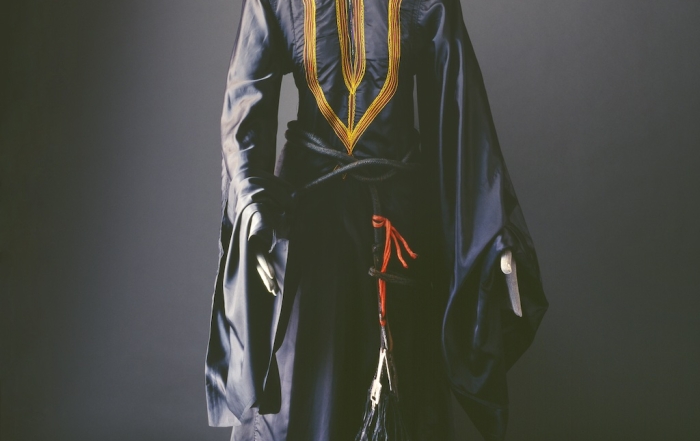
Yam thobe
Yam tribe Yam thobe cut with a fitted waistband, ample skirt and wide triangular sleeves. The belt is hand woven leather and the headdress is made of wool. The great Wadi Najran drains the Asir[...]
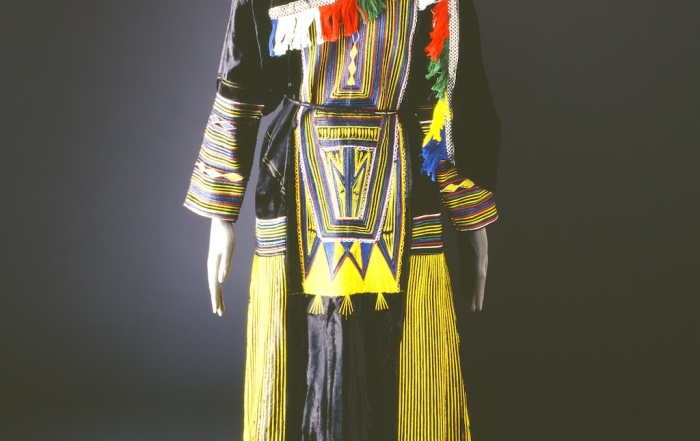
Asir velvet thobe
Asir, Southern Region Asir velvet thobe with front embroidered panels which recall the motifs of the hand painted decorations on the interiors of the traditional Asir homes. Asir, like the highlands of southern Hijaz, is[...]