Aperture Now Streaming on MBC Shahid
We are delighted to share that Aperture, the new documentary following British heritage photographer and Mansoojat Foundation Trustee Richard Wilding, is now available to watch on MBC Shahid. The film follows Richard as he returns to Saudi Arabia after more than a decade, revisiting the people and places he first documented during his early work in the Kingdom. From Jeddah’s Al Balad to the mountain villages of Aseer and Fayfa, the restored city of Diriyah and the Farasan Islands, Aperture reflects on how Saudi Arabia’s cultural landscape has evolved — and what has endured. The Mansoojat Foundation is honoured to[...]
The Zay Initiative
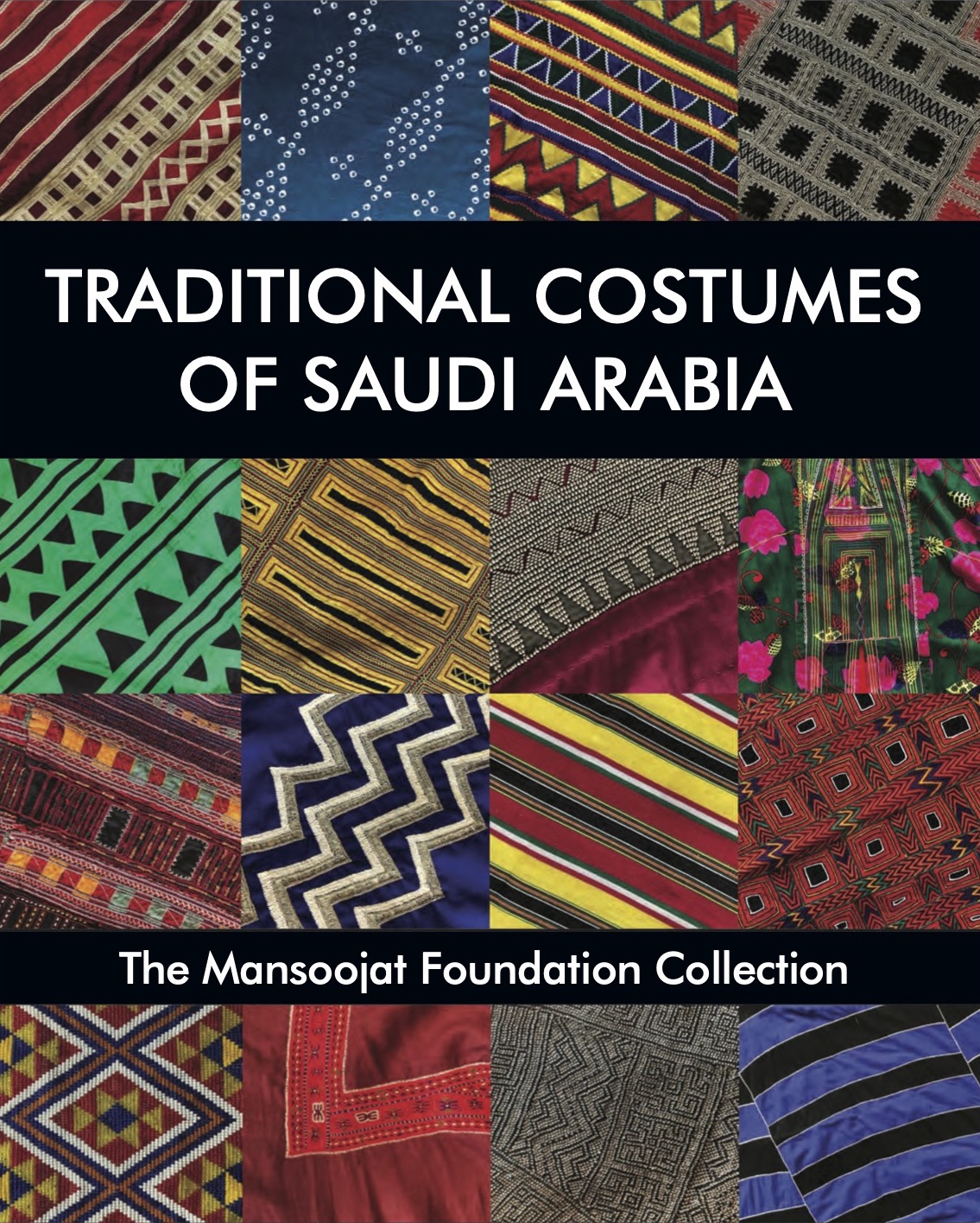
Traditional Costumes of Saudi Arabia –A book review The book is not only a showcase for The Mansoojat Foundation Collection but a window onto the culture and society of Saudi Arabia. By showcasing the costumes, we get to understand and learn about the different geographical regions, the different tribes and cultures, the layers and intricacies of society, as well as the vibrant and colourful textiles and crafts that are part of Saudi Arabia's heritage. https://thezay.org/mansoojat-book-review/
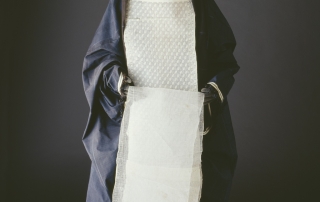
Hijaz white burqu
Hijaz, Western Region Hijaz white burqu (face mask) of fine gauze which is heavily starched. It is embroidered along the front and comes with different floral motifs and in varying lengths. The Ka‘bah at Makkah (first established at the time of the prophet Abraham) is for Muslims the “Bait Allah” or “House of God”. It is the most sacred spot on Earth, and, with Mount Arafat a few miles away, the focus of the annual hajj or Muslim pilgrimage. Makkah and Jeddah for centuries have been the melting-pot of the Muslim world, and this is reflected in dress styles.
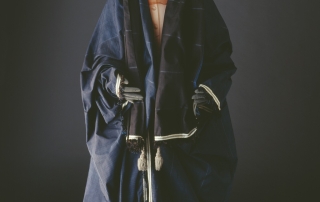
Hijaz milayah wrap
Hijaz, Western Region Hijaz milayah large rectangular wrap worn to go out. It is made of two panels with decorative bands and tassels along the edge. The silk fabric was either imported from India or Indonesia. The Ka‘bah at Makkah (first established at the time of the prophet Abraham) is for Muslims the “Bait Allah” or “House of God”. It is the most sacred spot on Earth, and, with Mount Arafat a few miles away, the focus of the annual hajj or Muslim pilgrimage. Makkah and Jeddah for centuries have been the melting-pot of the Muslim world, and this is[...]
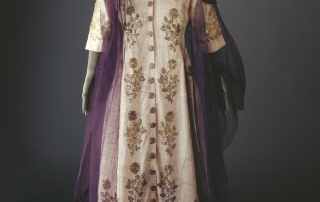
Hijaz ensemble
Hijaz, Western Region Hijaz ensemble with the inner fitted zaboon embroidered in a floral design with gold thread and small sequins. The outer thobe is made of a sheer linen-like fabric. The Ka‘bah at Makkah (first established at the time of the prophet Abraham) is for Muslims the “Bait Allah” or “House of God”. It is the most sacred spot on Earth, and, with Mount Arafat a few miles away, the focus of the annual hajj or Muslim pilgrimage. Makkah and Jeddah for centuries have been the melting-pot of the Muslim world, and this is reflected in dress styles.
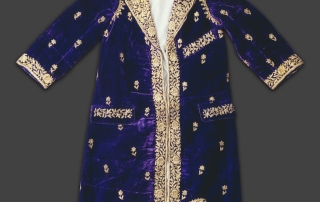
Hijaz boys’ fine silk velvet coat
Hijaz, Western Region Hijaz boys' fine silk velvet coat embroidered with sequins and gold thread. This type of garment was worn for traditional festivities. The Ka‘bah at Makkah (first established at the time of the prophet Abraham) is for Muslims the “Bait Allah” or “House of God”. It is the most sacred spot on Earth, and, with Mount Arafat a few miles away, the focus of the annual hajj or Muslim pilgrimage. Makkah and Jeddah for centuries have been the melting-pot of the Muslim world, and this is reflected in dress styles.
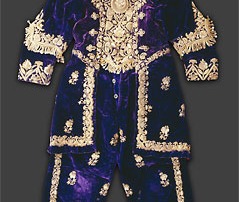
Hijaz boys’ two piece embroidered velvet suit
Hijaz, Western Region Hijaz boys' two piece embroidered velvet suit dating to c.1930. This style was restricted for the use of young boys. The Ka‘bah at Makkah (first established at the time of the prophet Abraham) is for Muslims the “Bait Allah” or “House of God”. It is the most sacred spot on Earth, and, with Mount Arafat a few miles away, the focus of the annual hajj or Muslim pilgrimage. Makkah and Jeddah for centuries have been the melting-pot of the Muslim world, and this is reflected in dress styles.
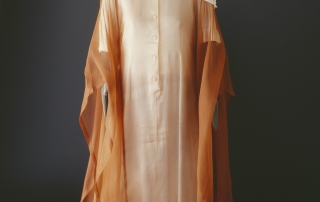
Hijaz outfit
Hijaz, Western Region Hijaz outfit comprising the inner silk zaboon under the fine organza thobe. Casual day outfits were made in the same way except that the fabric was plain or printed cotton. The Ka‘bah at Makkah (first established at the time of the prophet Abraham) is for Muslims the “Bait Allah” or “House of God”. It is the most sacred spot on Earth, and, with Mount Arafat a few miles away, the focus of the annual hajj or Muslim pilgrimage. Makkah and Jeddah for centuries have been the melting-pot of the Muslim world, and this is reflected in dress[...]
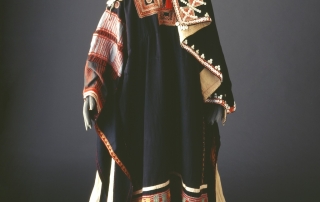
Sulaym thobe showing the embroidery on the yoke, the shoulders and the appliqué
Sulaym tribe Sulaym thobe showing the embroidery on the yoke, the shoulders and the appliqué on the hem. The rectangular black headdress is decorated with red fabric and nacre buttons arranged in geometric patterns. The Sulaym are related to the Harb, and led a semi-settled life near the Red Sea coast as fishermen, traders and herders. They share the cut of their garments with the Harb. But Sulaym patchwork, quilting and intricate styles of embroidery are distinctive. Nor do they favour blue fabric. Lawrence of Arabia fought in the Arab Revolt in the Hijaz, Jordan and Syria in 1916–18. His[...]
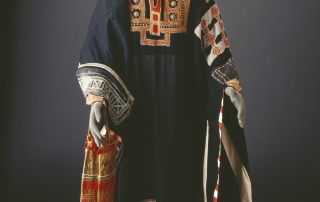
Sulaym thobe with finely embroidered yoke
Sulaym tribe Sulaym thobe with finely embroidered yoke. The sleeves have patchwork along the shoulders and around the edges. The circular iqal (head-band ) is made of woven leather interspersed with silver beads and bound around a malleable core. The Sulaym are related to the Harb, and led a semi-settled life near the Red Sea coast as fishermen, traders and herders. They share the cut of their garments with the Harb. But Sulaym patchwork, quilting and intricate styles of embroidery are distinctive. Nor do they favour blue fabric. Lawrence of Arabia fought in the Arab Revolt in the Hijaz, Jordan[...]
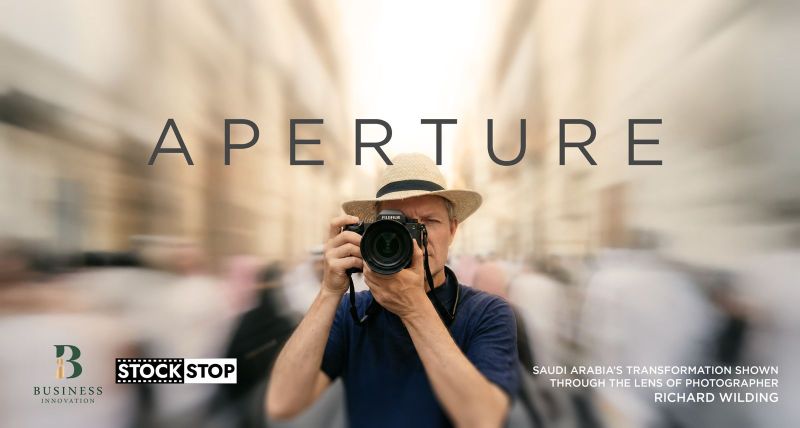
We are delighted to share that Aperture, the new documentary following British heritage photographer and Mansoojat Foundation Trustee Richard Wilding, is now available to watch on MBC Shahid. The film[...]
Traditional Costumes of Saudi Arabia –A book review The book is not only a showcase for The Mansoojat Foundation Collection but a window onto the culture and society of Saudi[...]
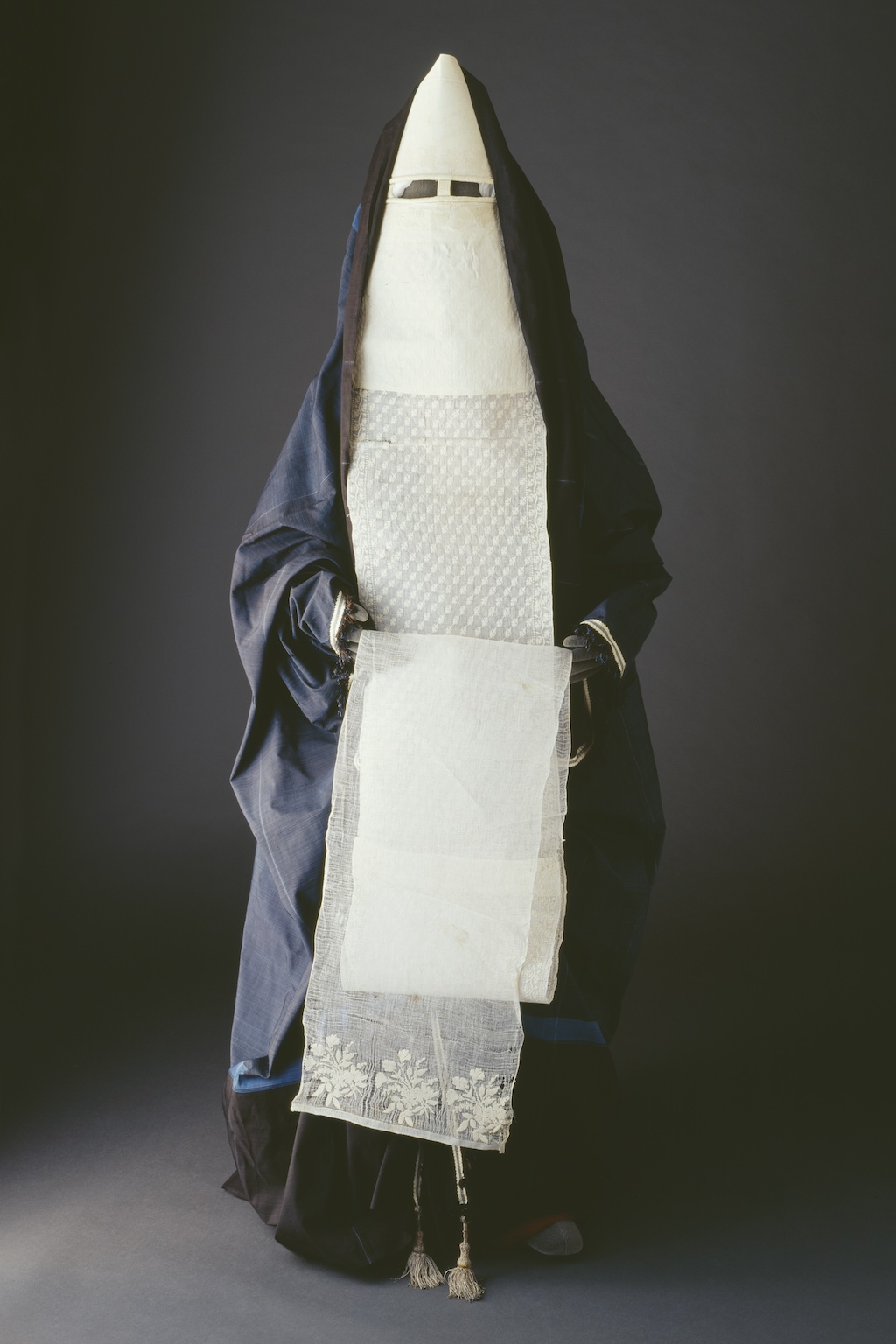
Hijaz, Western Region Hijaz white burqu (face mask) of fine gauze which is heavily starched. It is embroidered along the front and comes with different floral motifs and in varying[...]
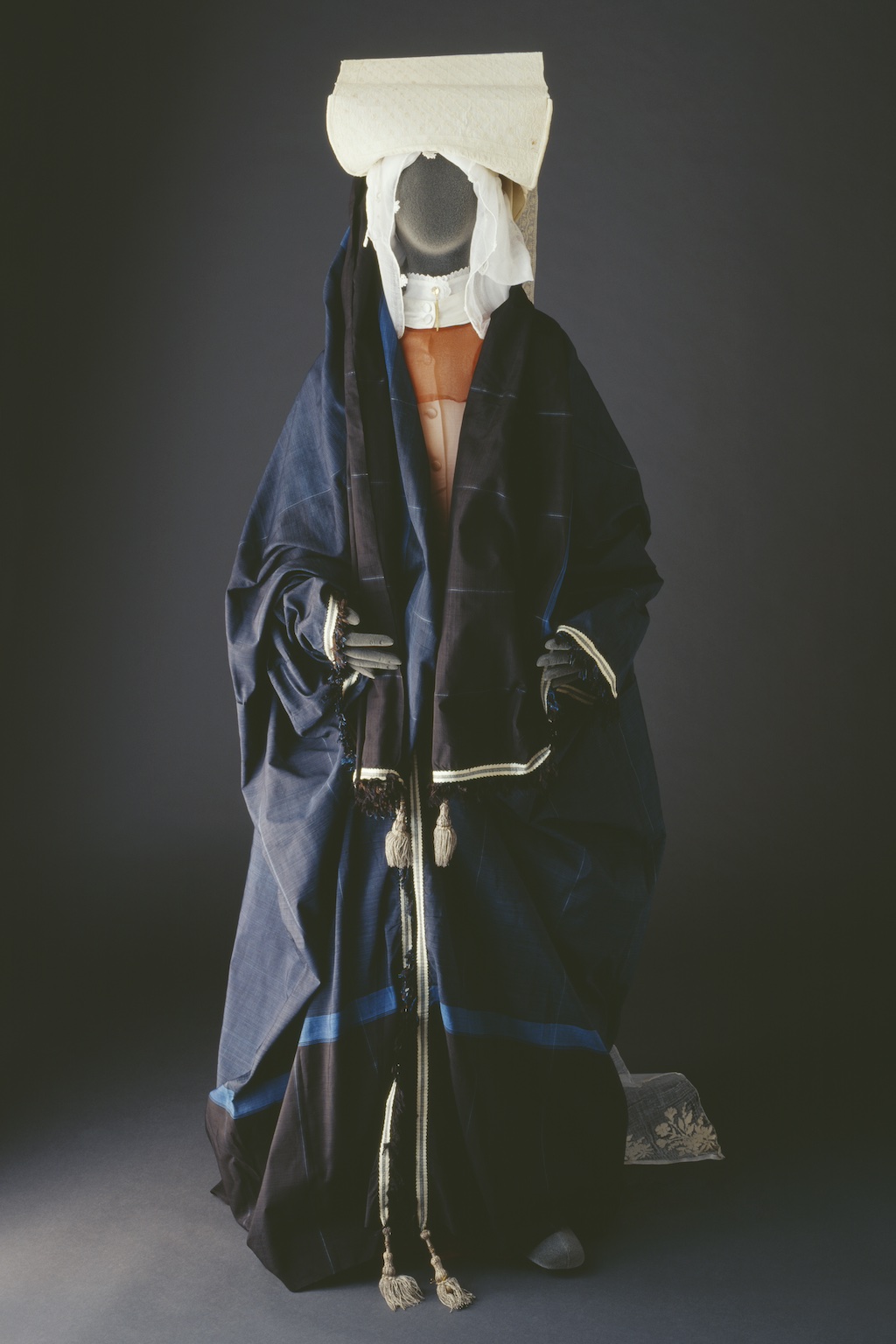
Hijaz, Western Region Hijaz milayah large rectangular wrap worn to go out. It is made of two panels with decorative bands and tassels along the edge. The silk fabric was[...]
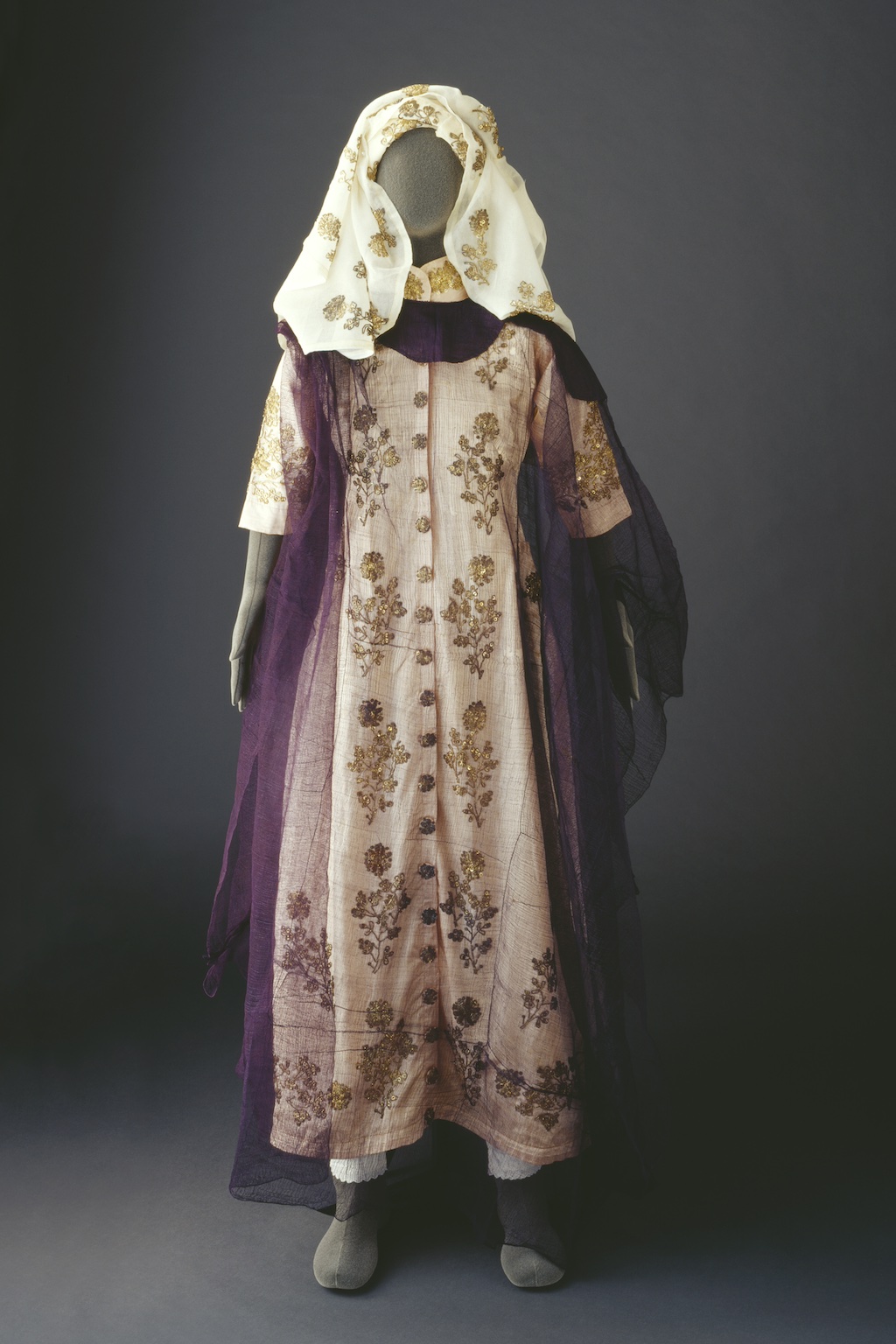
Hijaz, Western Region Hijaz ensemble with the inner fitted zaboon embroidered in a floral design with gold thread and small sequins. The outer thobe is made of a sheer linen-like[...]
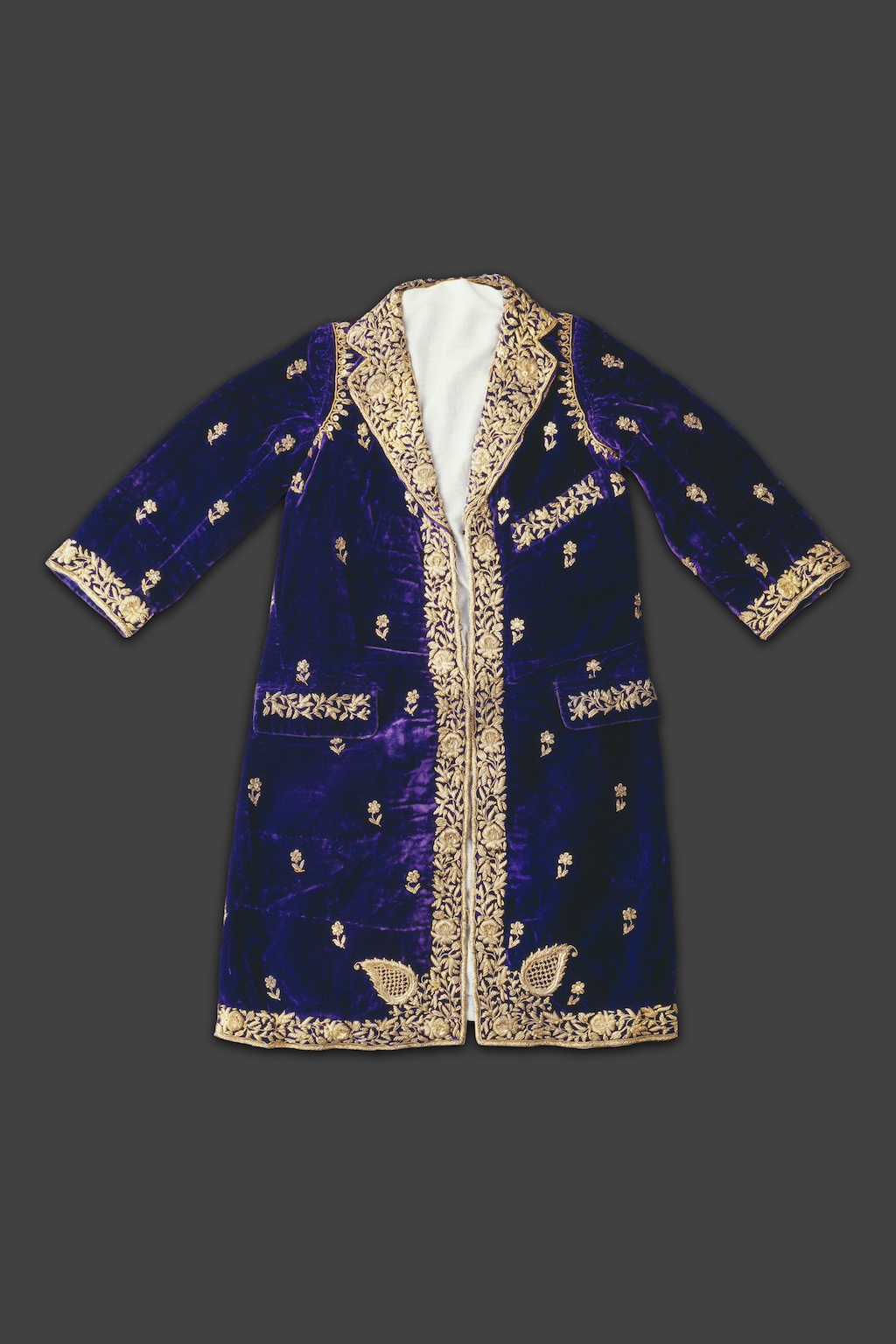
Hijaz, Western Region Hijaz boys' fine silk velvet coat embroidered with sequins and gold thread. This type of garment was worn for traditional festivities. The Ka‘bah at Makkah (first established[...]
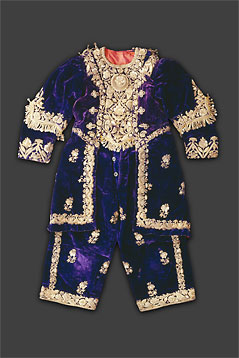
Hijaz, Western Region Hijaz boys' two piece embroidered velvet suit dating to c.1930. This style was restricted for the use of young boys. The Ka‘bah at Makkah (first established at[...]
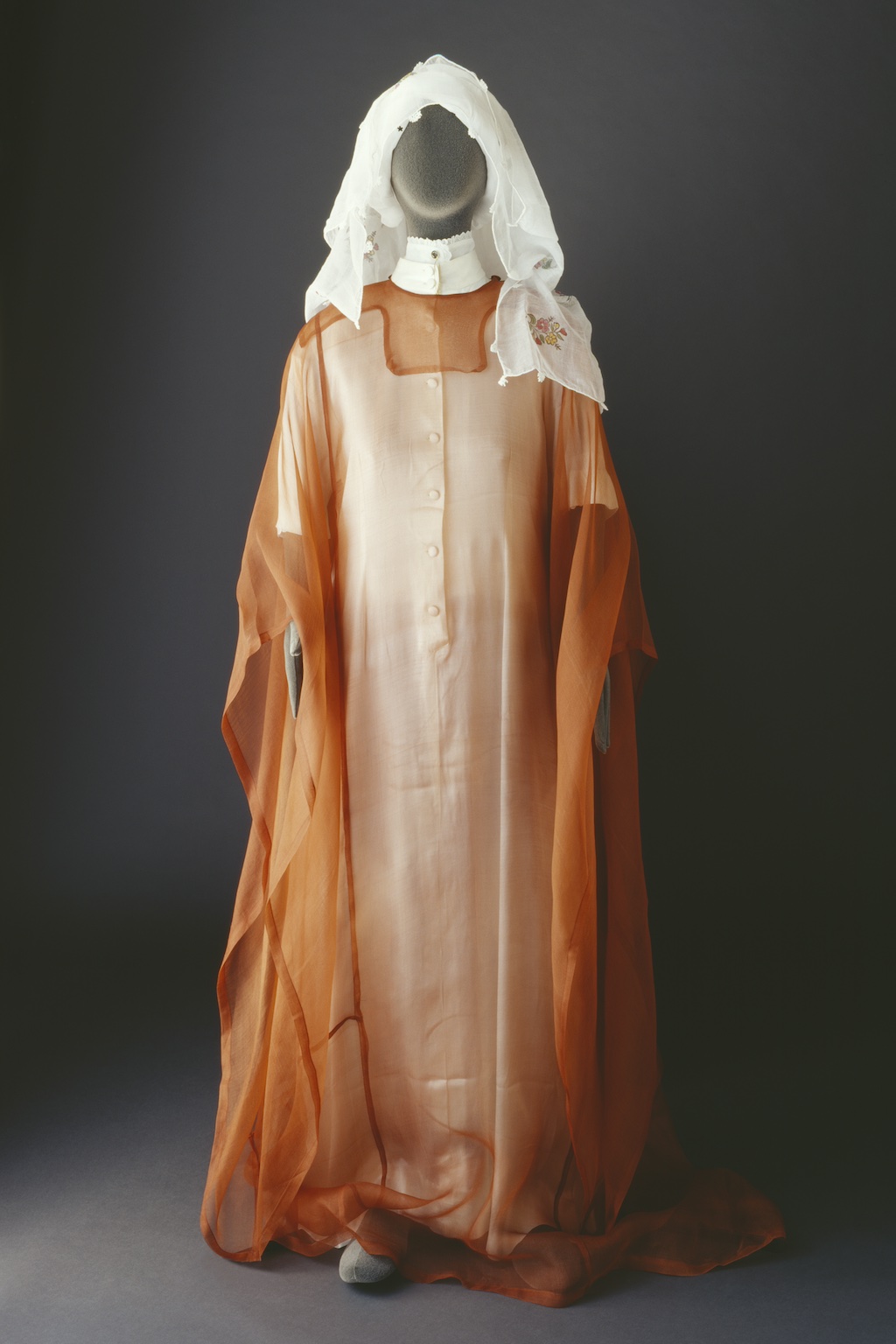
Hijaz, Western Region Hijaz outfit comprising the inner silk zaboon under the fine organza thobe. Casual day outfits were made in the same way except that the fabric was plain[...]
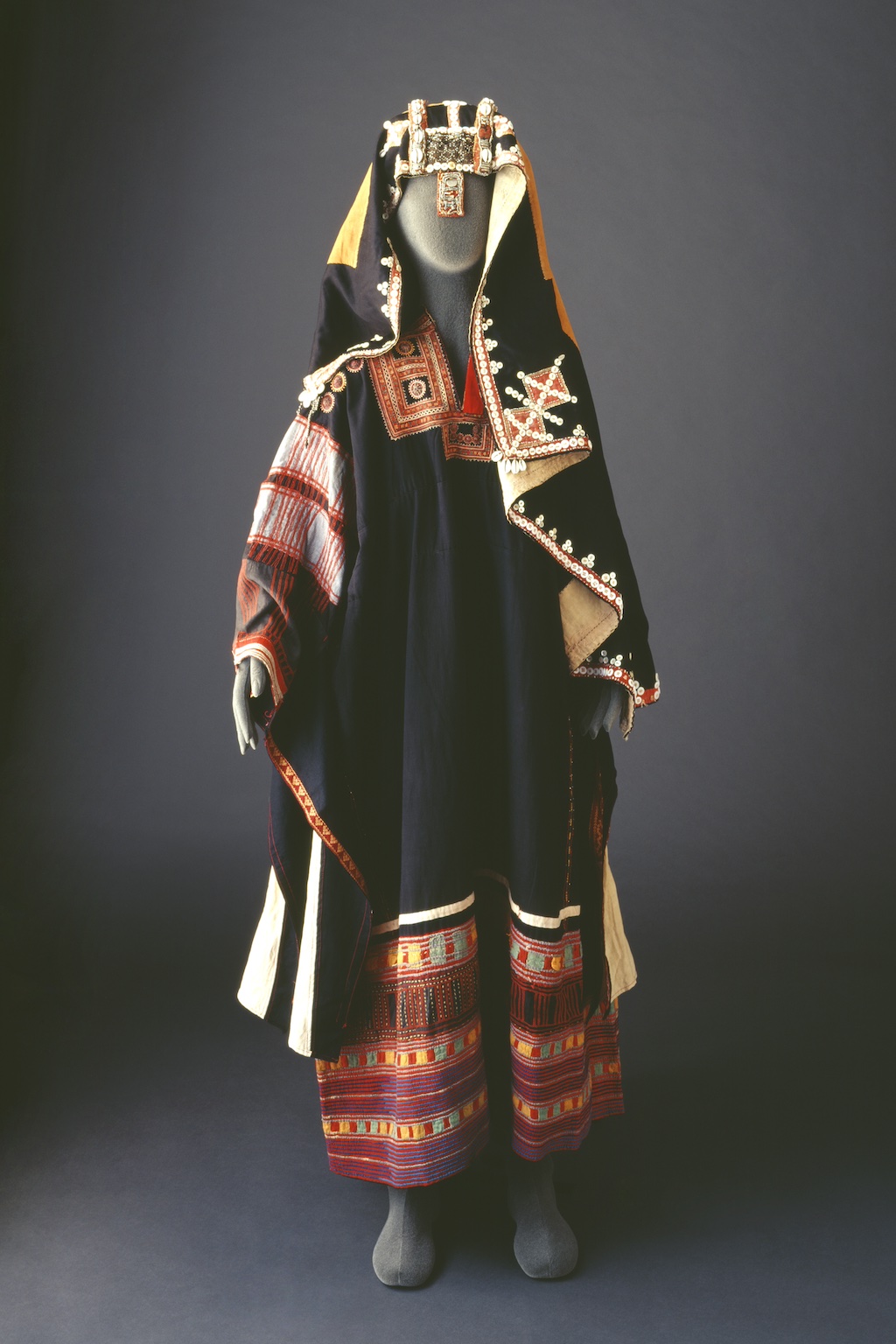
Sulaym tribe Sulaym thobe showing the embroidery on the yoke, the shoulders and the appliqué on the hem. The rectangular black headdress is decorated with red fabric and nacre buttons[...]
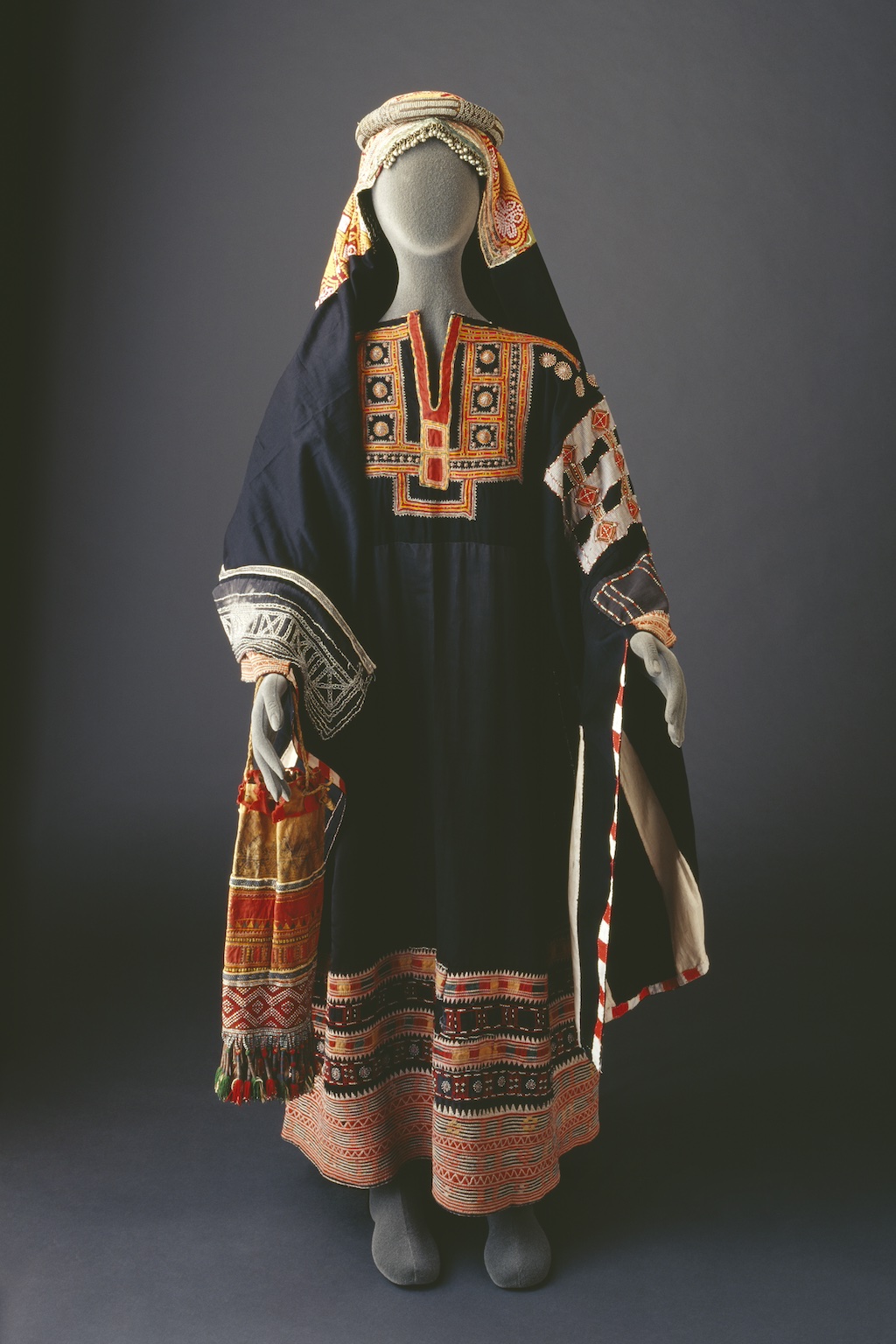
Sulaym tribe Sulaym thobe with finely embroidered yoke. The sleeves have patchwork along the shoulders and around the edges. The circular iqal (head-band ) is made of woven leather interspersed[...]