Hijaz white burqu
Hijaz, Western Region Hijaz white burqu (face mask) of fine gauze which is heavily starched. It is embroidered along the front and comes with different floral motifs and in varying lengths. The Ka‘bah at Makkah (first established at the time of the prophet Abraham) is for Muslims the “Bait Allah” or “House of God”. It is the most sacred spot on Earth, and, with Mount Arafat a few miles away, the focus of the annual hajj or Muslim pilgrimage. Makkah and Jeddah for centuries have been the melting-pot of the Muslim world, and this is reflected in dress styles.
Hijaz milayah wrap
Hijaz, Western Region Hijaz milayah large rectangular wrap worn to go out. It is made of two panels with decorative bands and tassels along the edge. The silk fabric was either imported from India or Indonesia. The Ka‘bah at Makkah (first established at the time of the prophet Abraham) is for Muslims the “Bait Allah” or “House of God”. It is the most sacred spot on Earth, and, with Mount Arafat a few miles away, the focus of the annual hajj or Muslim pilgrimage. Makkah and Jeddah for centuries have been the melting-pot of the Muslim world, and this is[...]
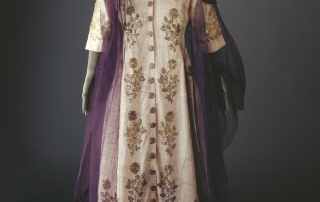
Hijaz ensemble
Hijaz, Western Region Hijaz ensemble with the inner fitted zaboon embroidered in a floral design with gold thread and small sequins. The outer thobe is made of a sheer linen-like fabric. The Ka‘bah at Makkah (first established at the time of the prophet Abraham) is for Muslims the “Bait Allah” or “House of God”. It is the most sacred spot on Earth, and, with Mount Arafat a few miles away, the focus of the annual hajj or Muslim pilgrimage. Makkah and Jeddah for centuries have been the melting-pot of the Muslim world, and this is reflected in dress styles.
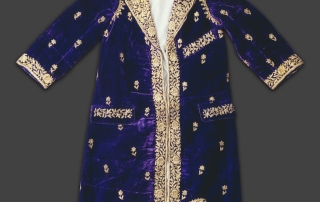
Hijaz boys’ fine silk velvet coat
Hijaz, Western Region Hijaz boys' fine silk velvet coat embroidered with sequins and gold thread. This type of garment was worn for traditional festivities. The Ka‘bah at Makkah (first established at the time of the prophet Abraham) is for Muslims the “Bait Allah” or “House of God”. It is the most sacred spot on Earth, and, with Mount Arafat a few miles away, the focus of the annual hajj or Muslim pilgrimage. Makkah and Jeddah for centuries have been the melting-pot of the Muslim world, and this is reflected in dress styles.
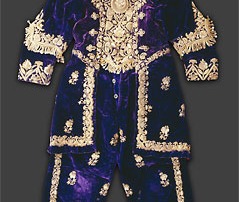
Hijaz boys’ two piece embroidered velvet suit
Hijaz, Western Region Hijaz boys' two piece embroidered velvet suit dating to c.1930. This style was restricted for the use of young boys. The Ka‘bah at Makkah (first established at the time of the prophet Abraham) is for Muslims the “Bait Allah” or “House of God”. It is the most sacred spot on Earth, and, with Mount Arafat a few miles away, the focus of the annual hajj or Muslim pilgrimage. Makkah and Jeddah for centuries have been the melting-pot of the Muslim world, and this is reflected in dress styles.
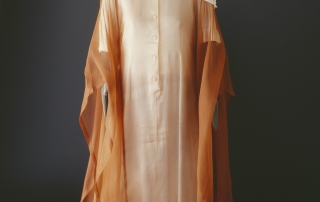
Hijaz outfit
Hijaz, Western Region Hijaz outfit comprising the inner silk zaboon under the fine organza thobe. Casual day outfits were made in the same way except that the fabric was plain or printed cotton. The Ka‘bah at Makkah (first established at the time of the prophet Abraham) is for Muslims the “Bait Allah” or “House of God”. It is the most sacred spot on Earth, and, with Mount Arafat a few miles away, the focus of the annual hajj or Muslim pilgrimage. Makkah and Jeddah for centuries have been the melting-pot of the Muslim world, and this is reflected in dress[...]
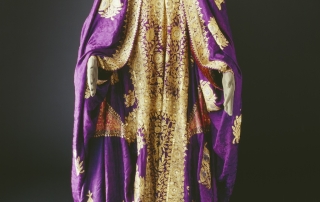
Najd, Central Region and Eastern Region thobe of fine Indian silk
Najd and Central Region Najd, Central Region and Eastern Region thobe of fine Indian silk embroidered with sequins and gold thread. The sleeves are voluminous and are brought around to cover the head. Central Saudi Arabia, or Najd, is a land of desert, escarpment and oases. Traditionally, this region has been populated by nomadic herders and settled farmers. Tribal affiliation is valued and frequently spans the nomad–settler divide. From its capital at al-Dir‘iyyah near Riyadh, the Al Saud dynasty first united central and eastern Arabia in the 18th century, before finally unifying all regions of the Kingdom between 1902 and[...]
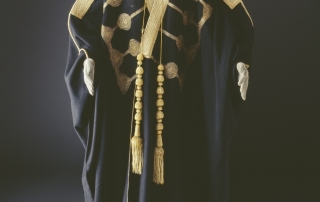
Qassim thick wool woman’s aba
Qassim, Northern Region Qassim thick wool woman's aba (cloak) embroidered with gold thread and having elaborate gold thread tassels. This type of aba is for the bride to wear on her wedding night. The mountains of Jabal Shammar shield northern Najd from the sands of the Great Nafud desert. Grazing is good and the area was famed for its Arabian horses. Lady Anne Blunt and her husband Wilfrid came in search of horses when they visited the Amir Ibn Rashid at Hail in 1878–9. The Rashaida tribe of the Hail region have migrated far and wide, to Sudan and Ethiopia.[...]
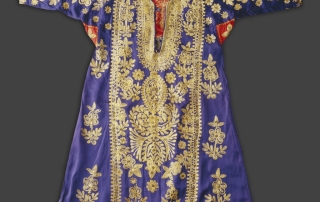
Najd, Central Region and Eastern Region little girl’s outfit
Najd and Central Region Najd, Central Region and Eastern Region little girl's outfit in pure silk. These thobes were specially commissioned and imported from India. Central Saudi Arabia, or Najd, is a land of desert, escarpment and oases. Traditionally, this region has been populated by nomadic herders and settled farmers. Tribal affiliation is valued and frequently spans the nomad–settler divide. From its capital at al-Dir‘iyyah near Riyadh, the Al Saud dynasty first united central and eastern Arabia in the 18th century, before finally unifying all regions of the Kingdom between 1902 and 1932. Building was chiefly of sun-dried mud, freely[...]
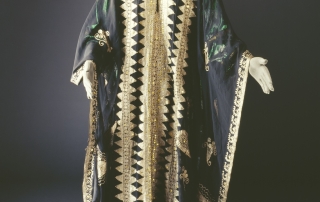
Najd and Central Region thobe in chiffon
Najd and Central Region Najd and Central Region thobe in chiffon embroidered with sequins and gold thread. Central Saudi Arabia, or Najd, is a land of desert, escarpment and oases. Traditionally, this region has been populated by nomadic herders and settled farmers. Tribal affiliation is valued and frequently spans the nomad–settler divide. From its capital at al-Dir‘iyyah near Riyadh, the Al Saud dynasty first united central and eastern Arabia in the 18th century, before finally unifying all regions of the Kingdom between 1902 and 1932. Building was chiefly of sun-dried mud, freely available and thermally inert, so helping to keep[...]
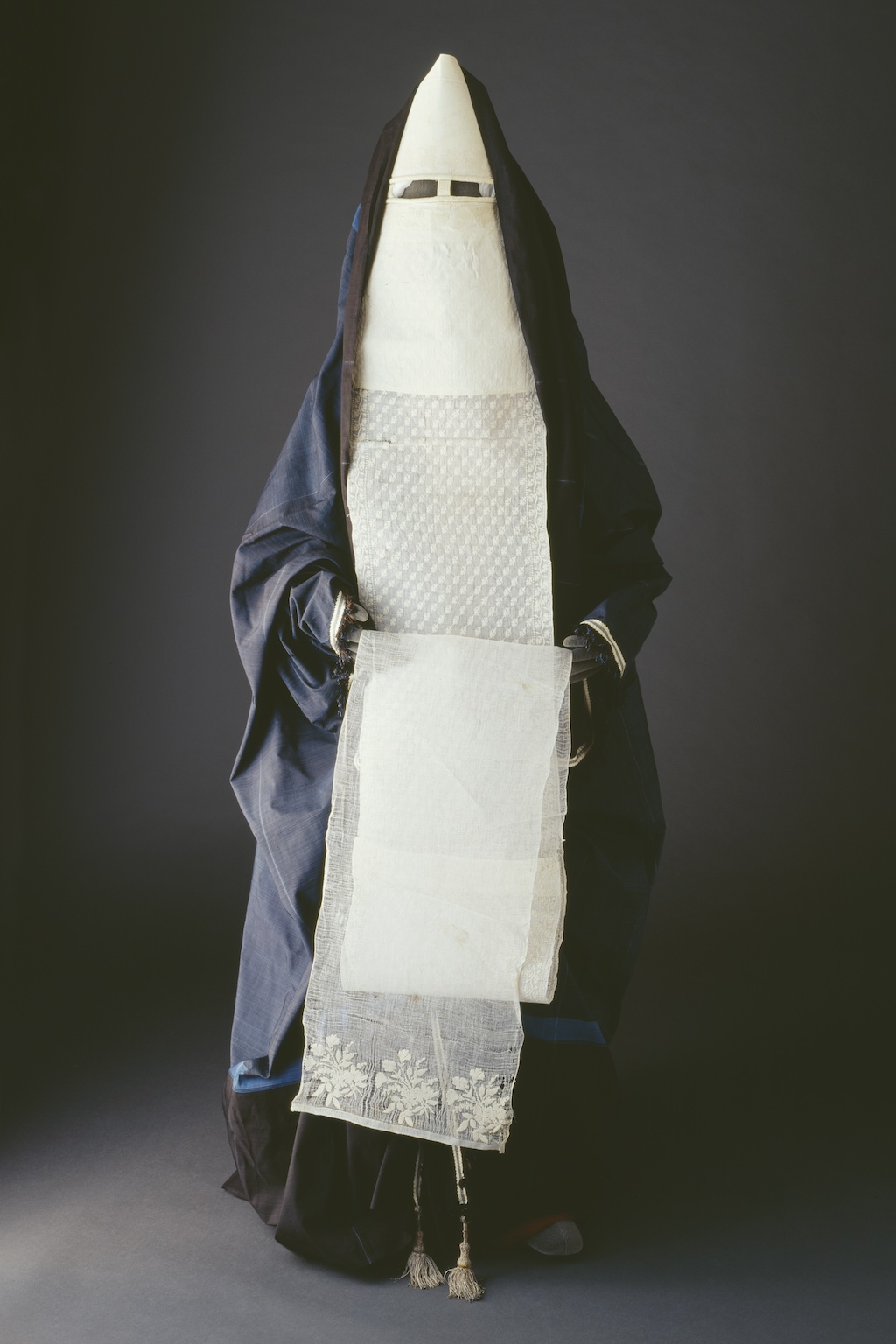
Hijaz, Western Region Hijaz white burqu (face mask) of fine gauze which is heavily starched. It is embroidered along the front and comes with different floral motifs and in varying[...]
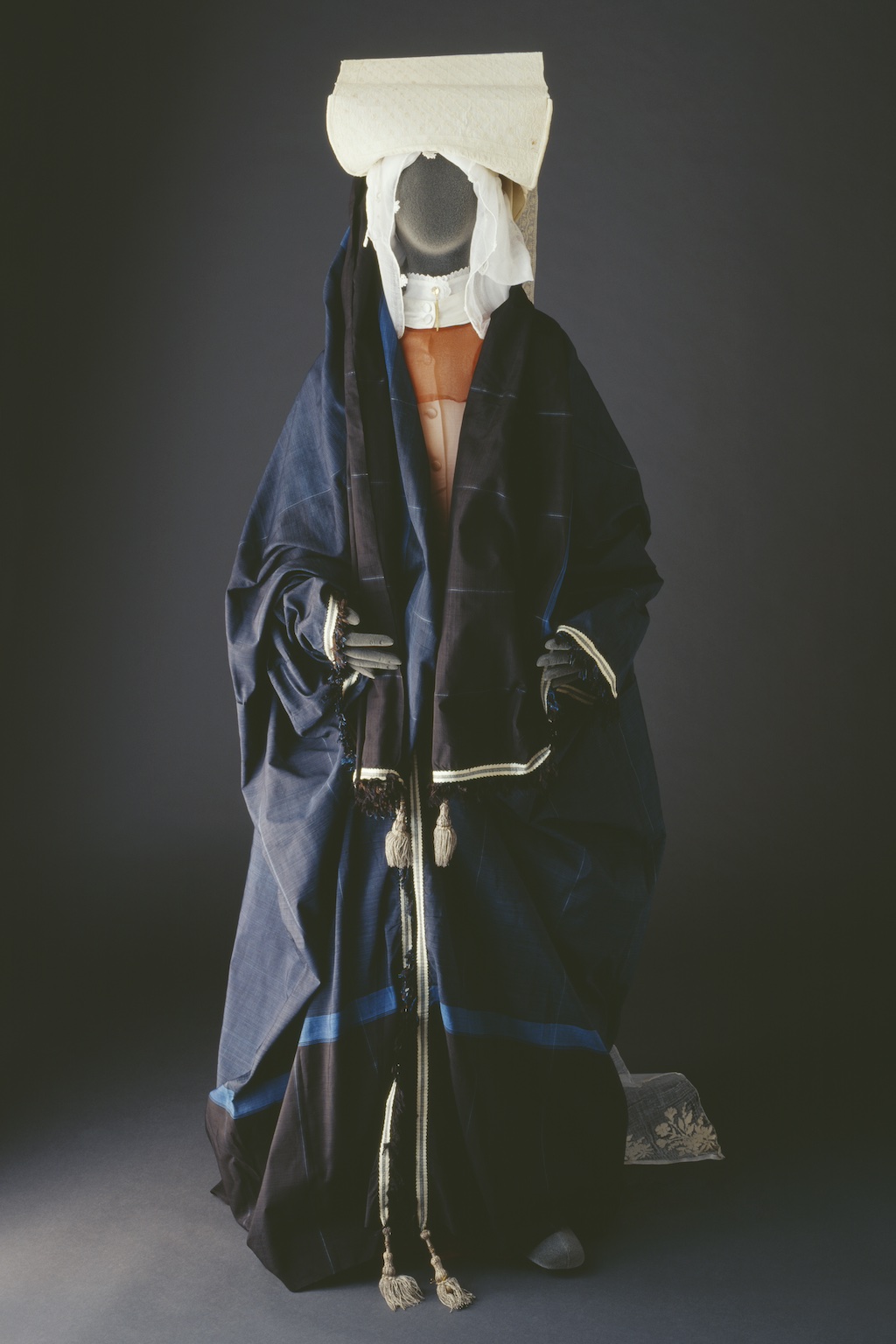
Hijaz, Western Region Hijaz milayah large rectangular wrap worn to go out. It is made of two panels with decorative bands and tassels along the edge. The silk fabric was[...]
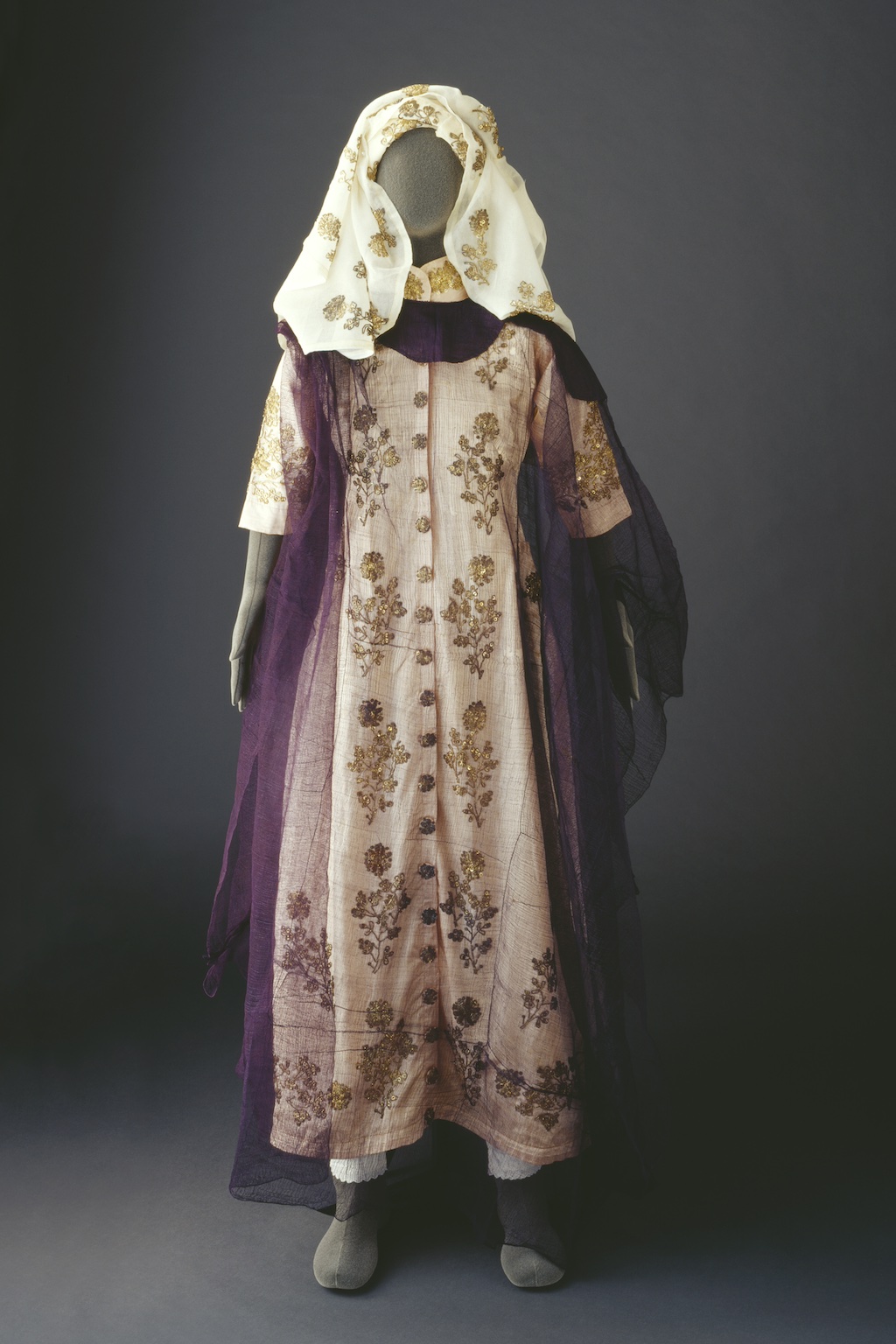
Hijaz, Western Region Hijaz ensemble with the inner fitted zaboon embroidered in a floral design with gold thread and small sequins. The outer thobe is made of a sheer linen-like[...]
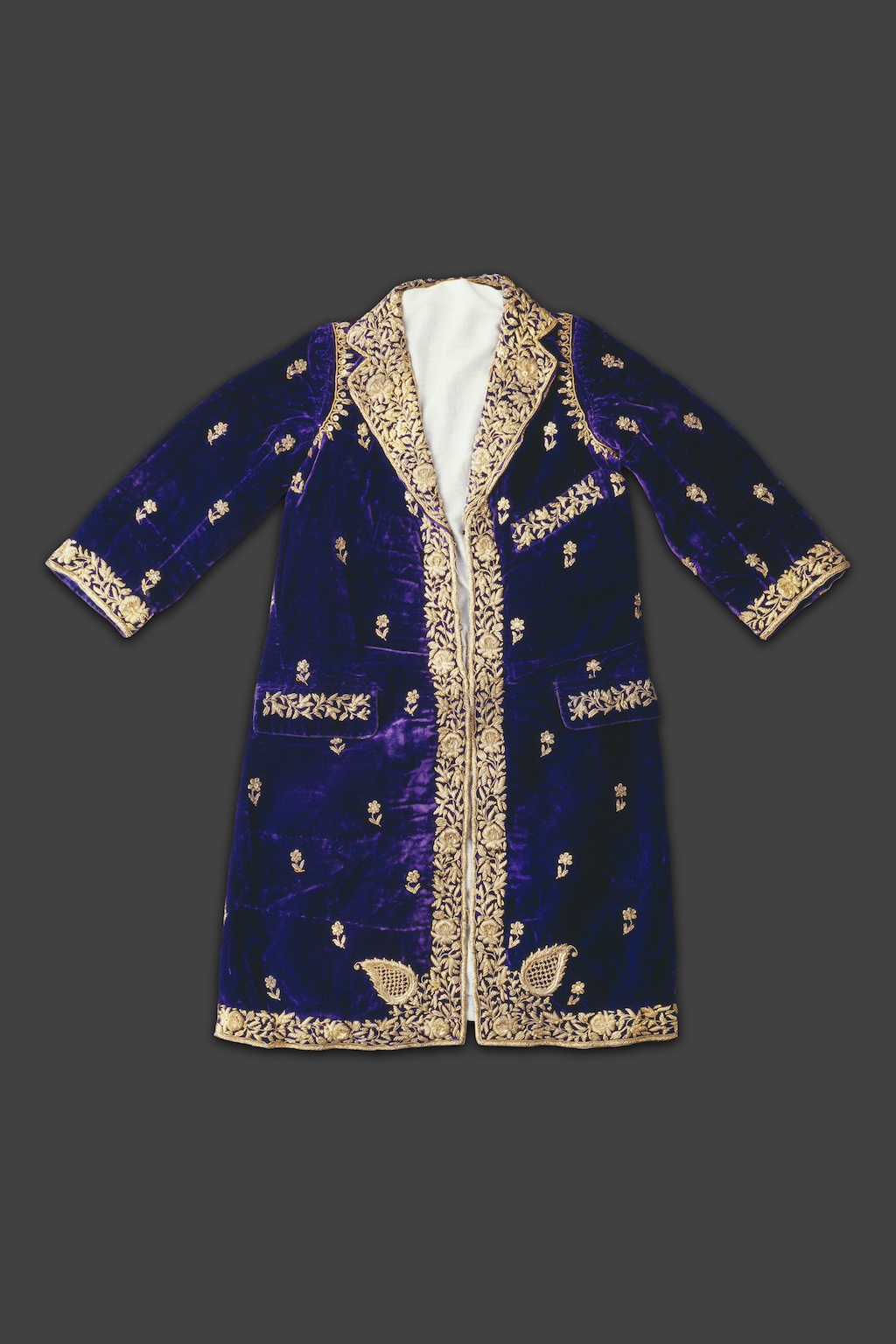
Hijaz, Western Region Hijaz boys' fine silk velvet coat embroidered with sequins and gold thread. This type of garment was worn for traditional festivities. The Ka‘bah at Makkah (first established[...]
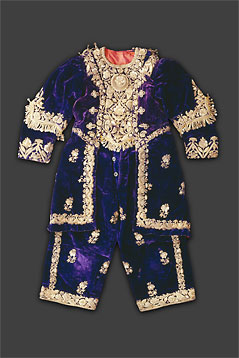
Hijaz, Western Region Hijaz boys' two piece embroidered velvet suit dating to c.1930. This style was restricted for the use of young boys. The Ka‘bah at Makkah (first established at[...]
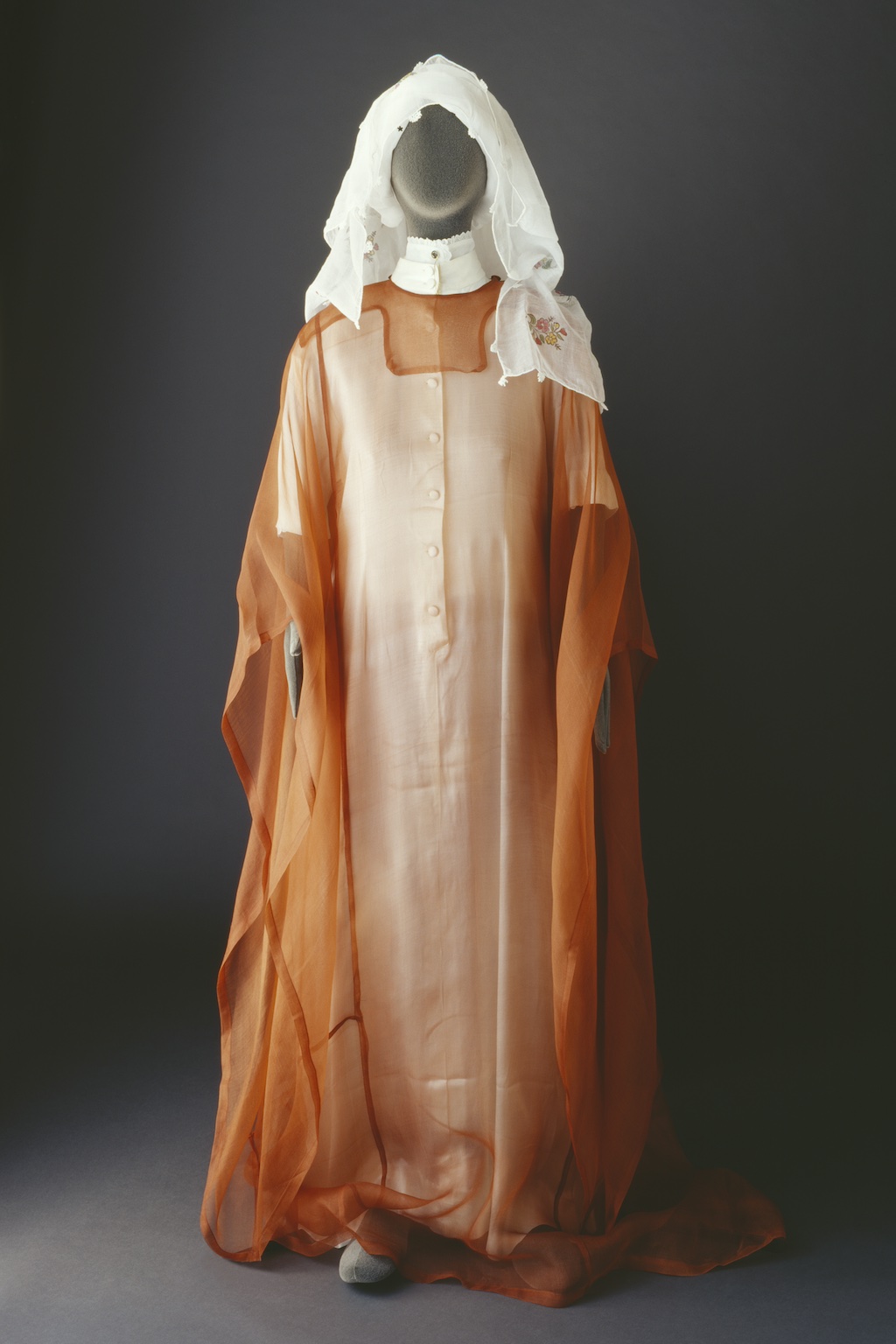
Hijaz, Western Region Hijaz outfit comprising the inner silk zaboon under the fine organza thobe. Casual day outfits were made in the same way except that the fabric was plain[...]
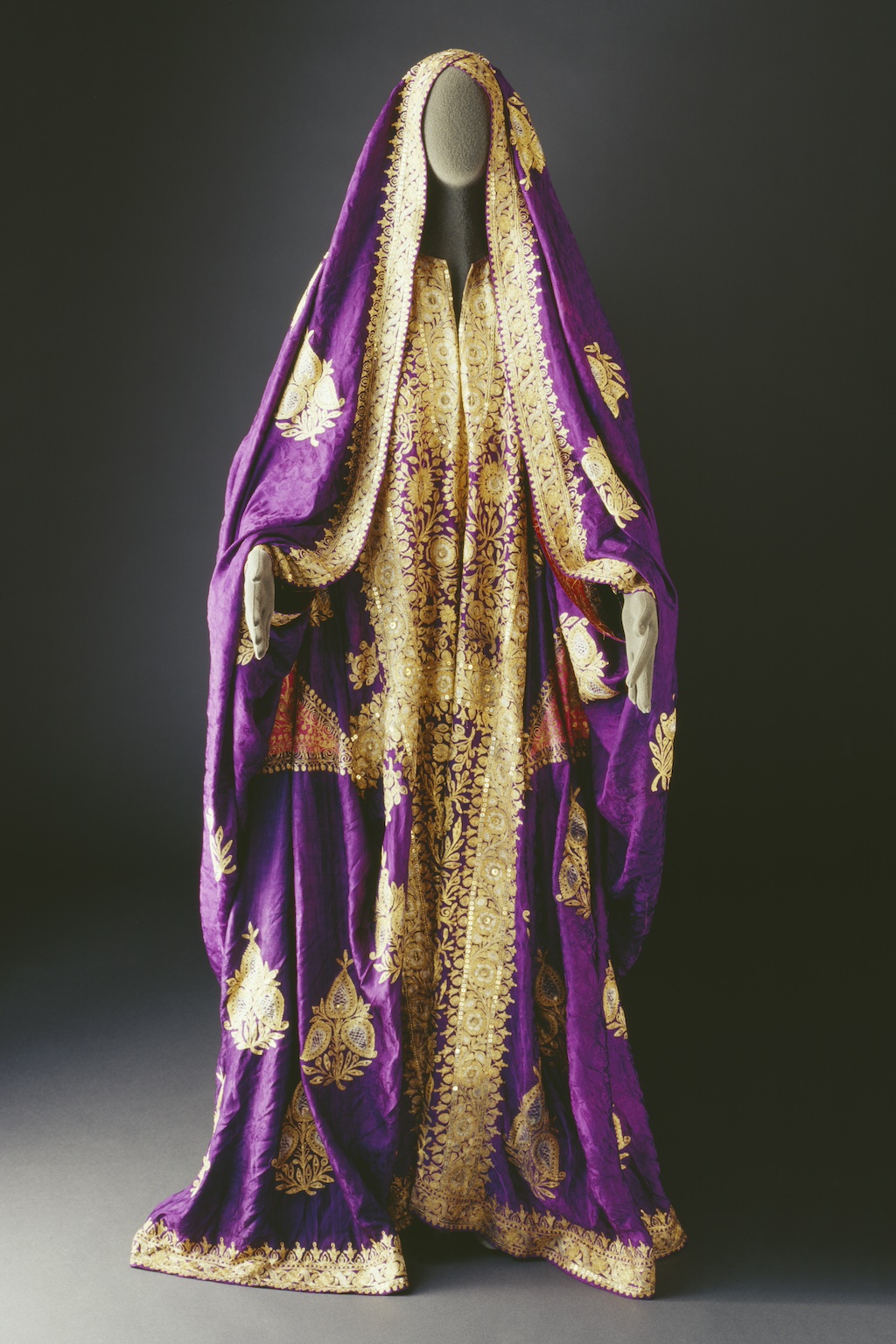
Najd and Central Region Najd, Central Region and Eastern Region thobe of fine Indian silk embroidered with sequins and gold thread. The sleeves are voluminous and are brought around to[...]
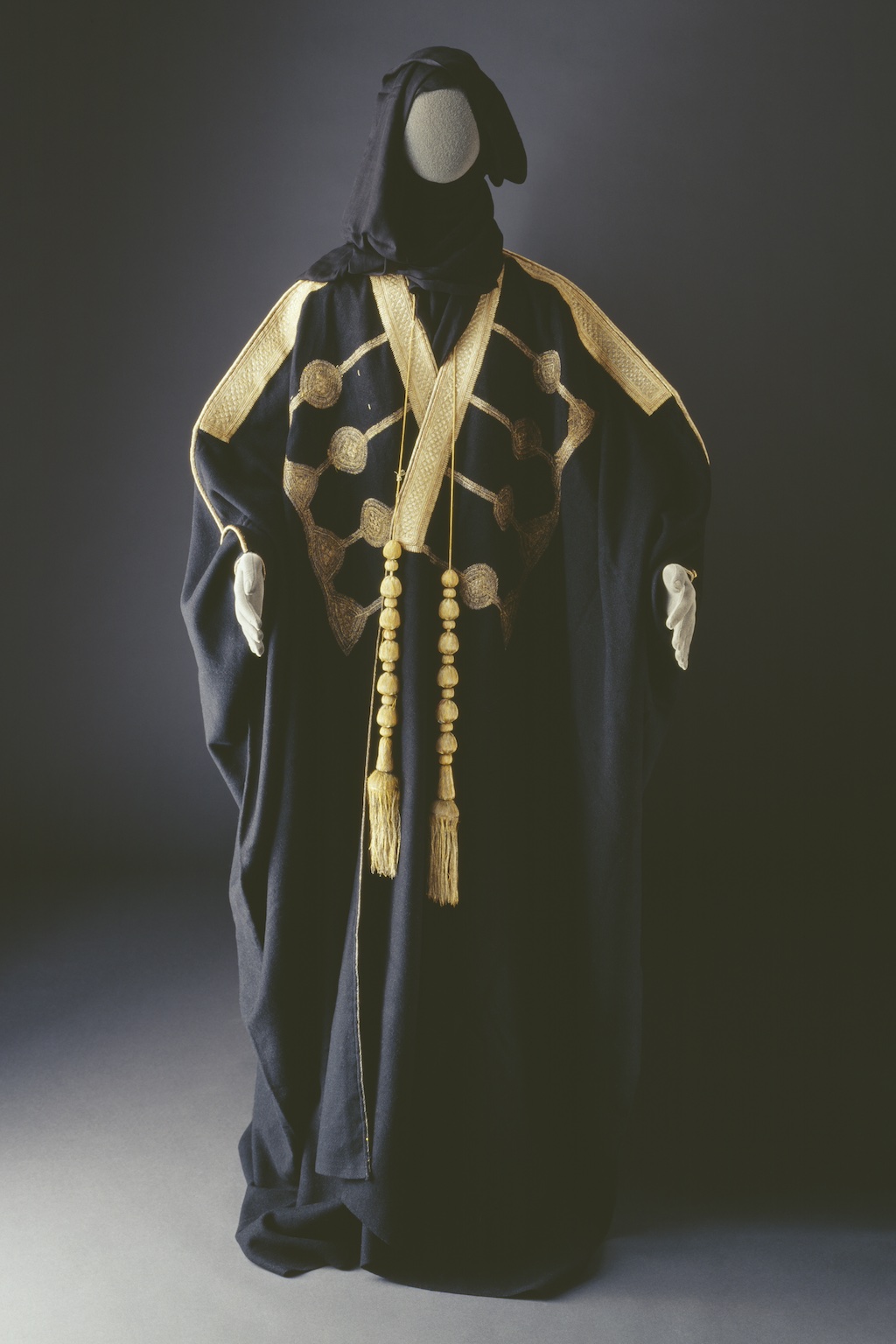
Qassim, Northern Region Qassim thick wool woman's aba (cloak) embroidered with gold thread and having elaborate gold thread tassels. This type of aba is for the bride to wear on[...]
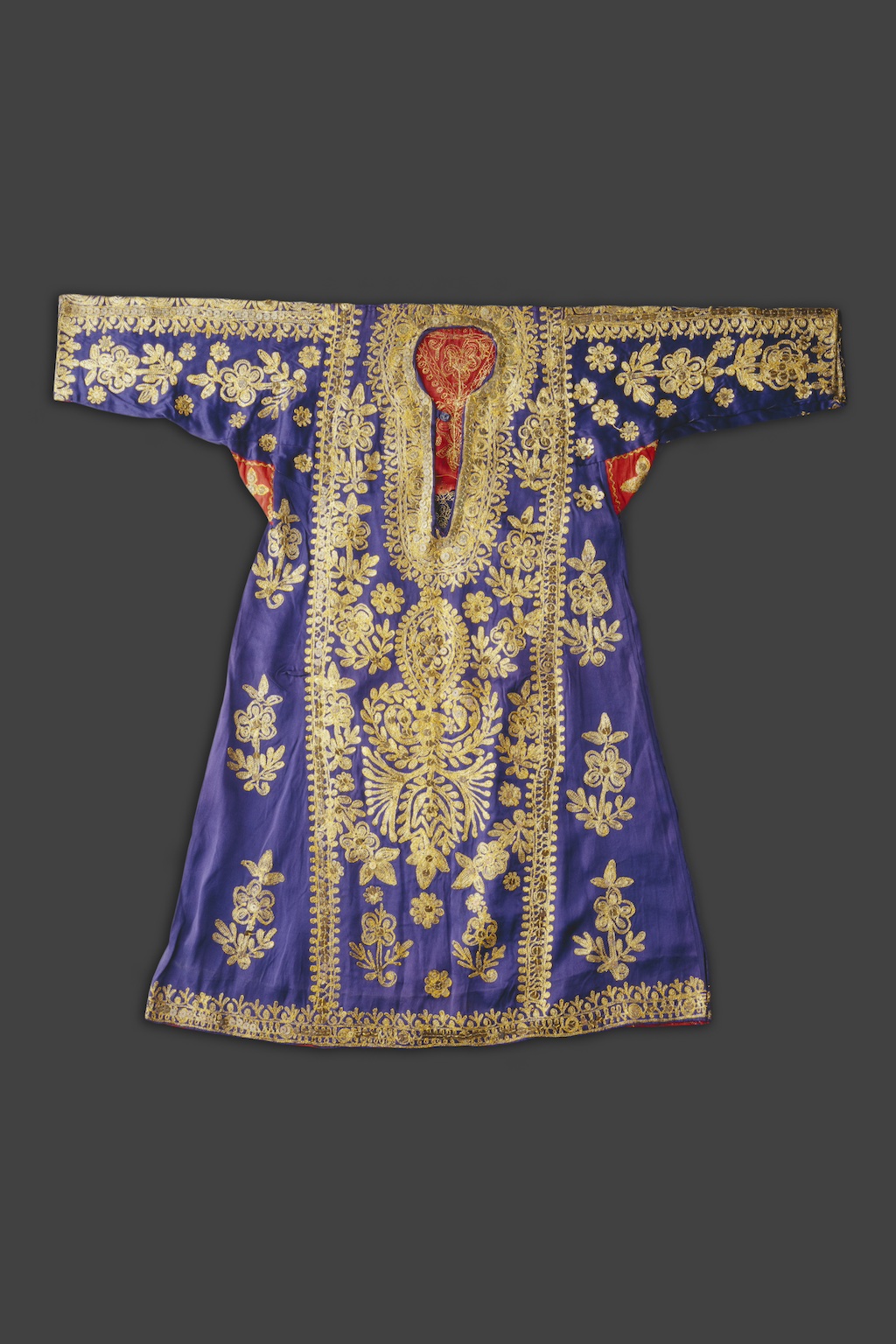
Najd and Central Region Najd, Central Region and Eastern Region little girl's outfit in pure silk. These thobes were specially commissioned and imported from India. Central Saudi Arabia, or Najd,[...]
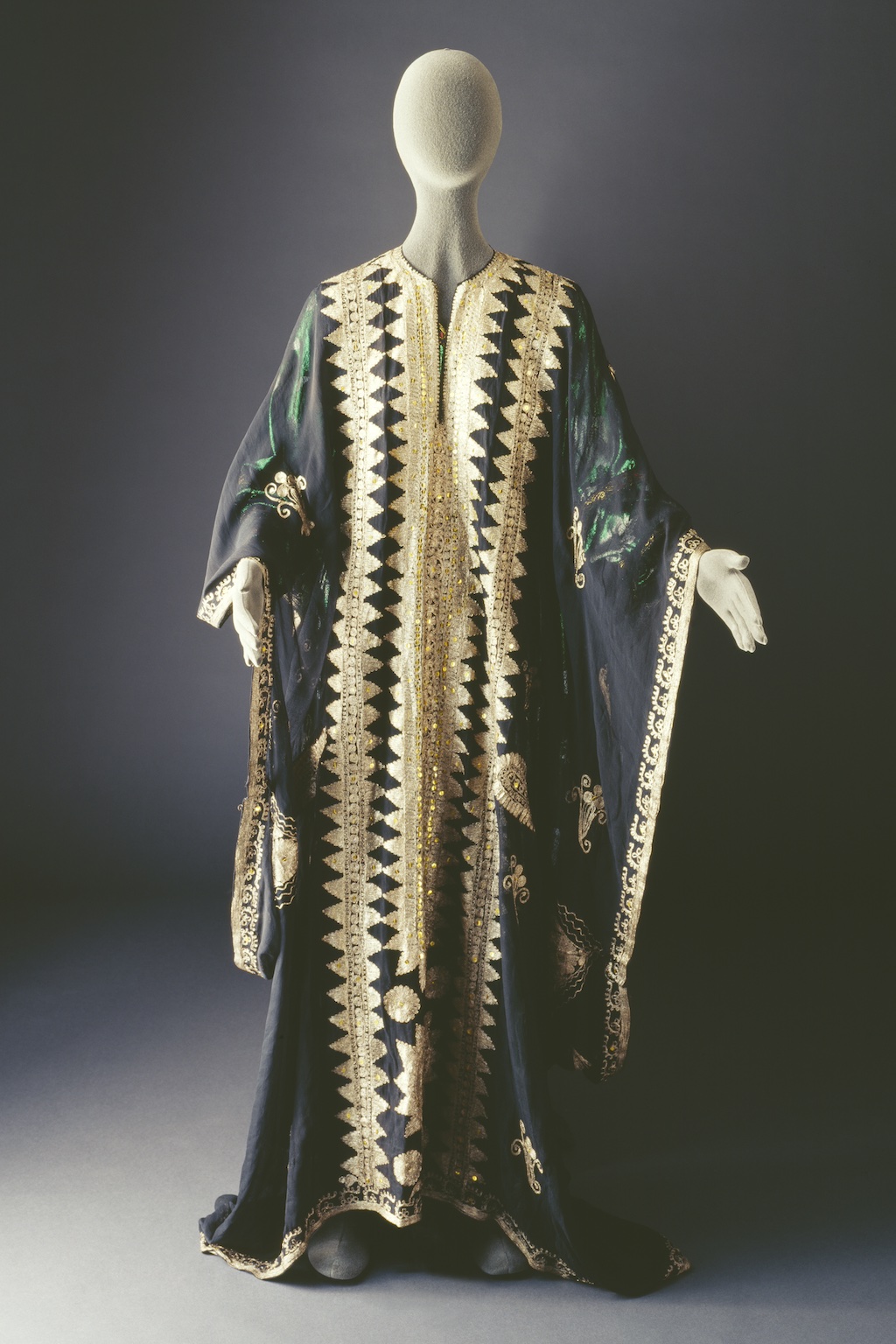
Najd and Central Region Najd and Central Region thobe in chiffon embroidered with sequins and gold thread. Central Saudi Arabia, or Najd, is a land of desert, escarpment and oases.[...]