Northern Region of Saudi Arabia
Where We Go In The Future Is Determined
By Where We Have Been In The Past.
Saudi Arabia’s traditional costumes are as diverse as its provinces, reflecting the rich cultural heritage and historical significance of each region. Here’s a outline of the traditional costumes of each province, emphasising their unique characteristics and historical context.
Al-Jawf
Men in Al-Jawf typically wear the thobe, a long white robe, paired with the ghutraor shemagh (headscarf). Women wear abaya and niqab, with intricate embroidery on the edges.
The traditional attire reflects the practical needs of desert life and the region’s agricultural heritage. The use of light fabrics and head coverings protects against the harsh sun.
Ha’il
Men in Ha’il wear the thobe and ghutra or shemagh. Women wear the abaya, often with intricate needlework and vibrant colours.
The traditional attire reflects Ha’il’s history as a cultural hub, with influences from various Bedouin tribes and a focus on craftsmanship.
Tabuk
Men wear the thobe with a bisht (a cloak) for special occasions. Women’s attire includes the abaya and niqab, often with colorful embroidery and decorations.
The traditional clothing of Tabuk is influenced by its historical role as a trade and military center, combining practical desert wear with ornamental elements for festive occasions.
Northern Borders (Al-Hudud ash Shamaliyah)
Similar to Al-Jawf, traditional attire includes the thobe for men and the abaya for women, often adorned with traditional embroidery.
The region’s costumes are influenced by its desert environment and proximity to trade routes, incorporating practical designs and materials
Recent Articles
Explore and discover our collection
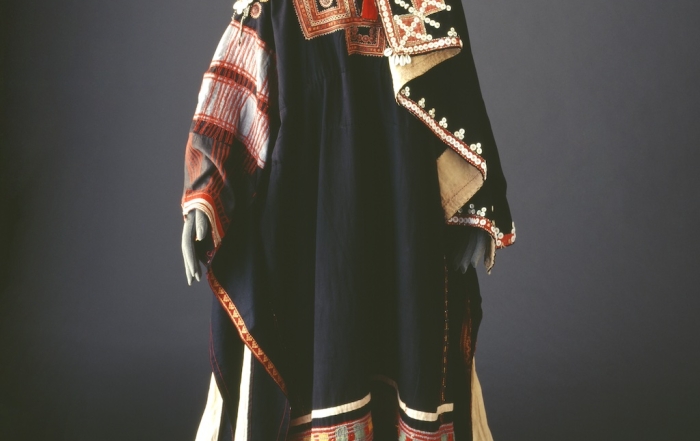
Sulaym thobe showing the embroidery on the yoke, the shoulders and the appliqué
Sulaym tribe Sulaym thobe showing the embroidery on the yoke, the shoulders and the appliqué on the hem. The rectangular black headdress is decorated with red fabric and nacre buttons arranged in geometric patterns. The[...]
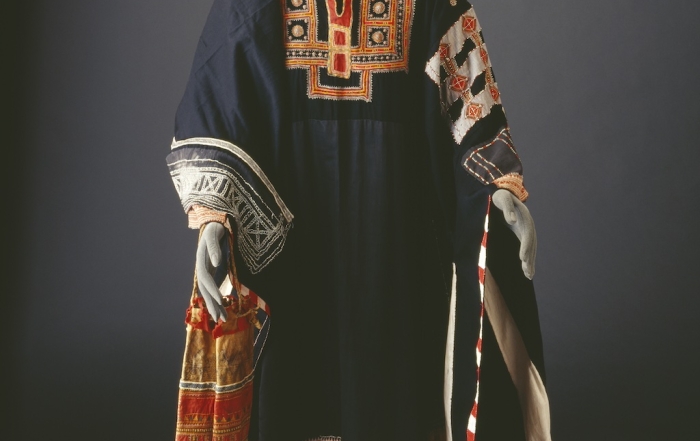
Sulaym thobe with finely embroidered yoke
Sulaym tribe Sulaym thobe with finely embroidered yoke. The sleeves have patchwork along the shoulders and around the edges. The circular iqal (head-band ) is made of woven leather interspersed with silver beads and bound[...]
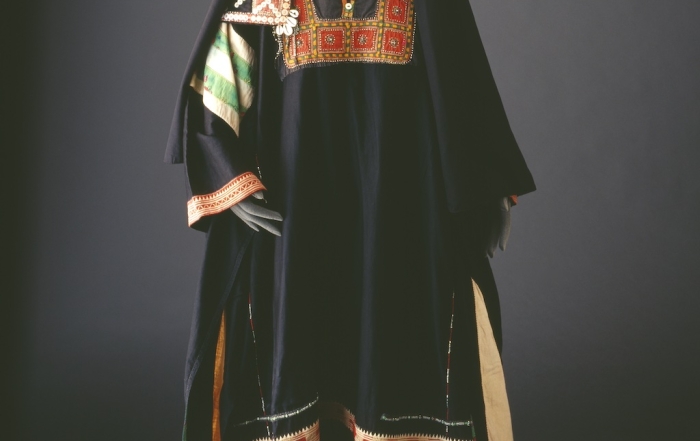
Sulaym thobe in black with very elaborate handiwork
Sulaym tribe Sulaym thobe in black with very elaborate handiwork along the hem and sleeves. The decoration comprises rows of multi coloured appliqué, embroidery and metal beading. The Sulaym are related to the Harb, and[...]
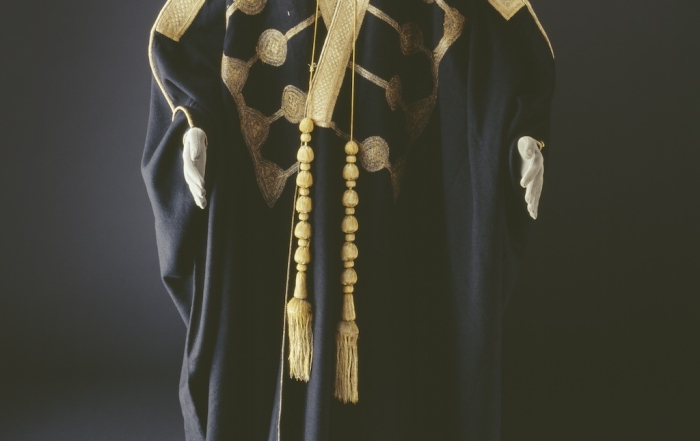
Qassim thick wool woman’s aba
Qassim, Northern Region Qassim thick wool woman's aba (cloak) embroidered with gold thread and having elaborate gold thread tassels. This type of aba is for the bride to wear on her wedding night. The mountains[...]